
Quite often it is the weekend car. Parked on the drive through January, it gets opened one bright morning to a mushroomy whiff and a trail of grey dots across the seat belt. Mould has found water that cannot escape. We begin by hunting for that water, whether it comes from a tired door rubber, a clogged drain or sodden underlay. Next, any growth you can see is cleaned off seats, carpet and trim, an antimicrobial is worked into each affected patch, and the interior is dried and freshened.
Getting to Draycott takes the van about 12 minutes, an 8.6 mile run east from Chilham, so arranging a slot is usually straightforward. We carry our own water and electricity and never charge for the journey. One point on health: if a passenger's asthma or allergies seem worse since the smell appeared, that conversation belongs with their GP.
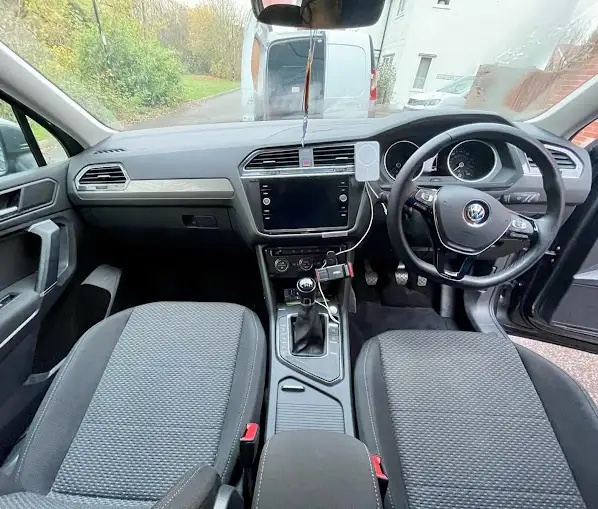
Why Draycott cabins struggle to dry from October to February
Draycott sits low, about 30 metres above sea level, and the modelled climate for the surrounding area has a clear damp season. ERA5 averages put humidity at 80% over the year, with October at 84%, November 87%, December 88% and January still 86%, and rain falls on about 144 days a year. Across those months, a cabin that takes on even a cupful of water gets almost no help from the weather in drying out, and a car that sits idle for days gets less still. A blocked drain or a split seal is usually where that cupful came from. Belts, seat cloth and carpet are where growth shows first.
Second vehicles are the usual suspects. In the two small Census 2021 areas (LSOAs) that make up the centre of Draycott, 39.1% of households have two cars or more, and the one reserved for weekends may stay shut for most of the week through winter. Semis (40%) and detached homes (22.9%) make up most of the housing there, so many of those cars sit on drives beside gardens, where hedges and trees shed leaves into the gutters at the base of the windscreen and around sunroofs. The same applies to a car left at home all week while you travel by train on the Midland Main Line railway.
Draycott at a glance
| Distance from our base | 8.6 miles by road (3.1 miles as the crow flies), about 12 minutes off-peak, east of DE24 5BN |
|---|---|
| Postcode districts | DE72 |
| Humidity (modelled) | 80% average relative humidity |
| Rain (modelled) | 775 mm a year, with 144 days of 1 mm or more |
| Height at the centre | about 30 m above sea level at the centre point |
Weather rows are modelled 2015 to 2024 averages for a grid cell that Draycott shares with Borrowash, Breaston, Chaddesden and 7 other places we cover, not readings taken in Draycott. Sources: road distance and drive time from OSRM routing on OpenStreetMap data; postcode and council data from postcodes.io; weather from the ERA5 reanalysis via Open-Meteo; height from the Open-Meteo elevation API.
Mould treatment visits around Draycott and DE72
Treatment is available in Draycott itself and out to Sawley, Breaston, Risley, Hopwell, Borrowash, Great Wilne and Church Wilne within DE72 and the edges of it. Expect it to take longer than a valet, because drying the interior is built into the job. That means we need a position where doors and tailgate can be left wide open for some time without obstructing anyone. If you have a drive, that is the natural choice; if not, any lawful roadside space does the job. Please clear the boot before we arrive, as the floor and spare wheel well are checked for water. Our van is self-sufficient for water and electricity.
Nearby villages
What Your Car Mould Removal Includes
- ✓ Inspection to find the moisture source
- ✓ Mould lifted from fabric and carpet
- ✓ Hard trim and door cards treated
- ✓ Seat belts and webbing cleaned
- ✓ Boot and spare wheel well checked
- ✓ Antimicrobial treatment of affected areas
- ✓ Odour treatment for the musty smell
- ✓ Advice on stopping the damp coming back
Stopping growth coming back in a Draycott car
Have a replacement cabin filter fitted soon after treatment. A used one can harbour spores and blow that stale smell back in whenever the fan is on, and since duct interiors are not something we steam, the filter is the safeguard. In autumn, clear the leaf-filled channel beneath the windscreen and pour a little water into the sunroof drains to make sure it drains out underneath. Look over each door rubber and the boot seal for tears or flattened sections.
A car standing idle between October and February should be started weekly and run for a few minutes with the blower on outside air. If you have the choice, book treatment in high summer, when the drier air gives the cabin its best chance to dry out. Wet towels, wetsuits and coats should come indoors the same day, and a moisture-absorbing tub in a footwell helps soak up what is left between drives.
From Our Google Reviews
"Very good service. Very kind person. Done a great job and surely recommend."
Car Mould Removal in Draycott: Questions
Water does not always announce itself. It can creep in through a blocked windscreen drain, a sunroof outlet or a tired door rubber and soak the underlay without wetting the top of the carpet. In the damper months, condensation inside a car left standing can be enough on its own. Finding the cause is part of our treatment.
Keep journeys short, open a window while you drive, and set the fan to fresh air rather than recirculate. Lift out wet mats and anything damp in the boot and dry them indoors. Hold off on household sprays and scented products, which cover the smell but leave the moisture where it is. If anyone with asthma or allergies feels worse in the car, keep them out of it until it has been treated.
Generally, if it is mechanically sound and you intend to keep it. Left alone, growth works deeper into seats and trim and the smell clings to everything, which also knocks the value. Where the water source is a cheap repair, treatment makes good sense. If the foam under a seat has been soaked for months, we will say so on the day, as cleaning has limits.