
To remove mould from car seats, dry the car completely, treat the affected fabric with an anti-mould solution, work it into the material, then lift it out with extraction or steam. Finally, find and fix whatever is making the car damp. Light mould can be tackled at home with care, but anything widespread or deep in the seat is safer and more reliable as a professional treatment, because spores spread invisibly.
Safety first: protect yourself
Mould spores can irritate your airways, so open the doors, work in fresh air, and wear gloves and a mask. If anyone using the car has asthma or allergies, be extra cautious, and consider having it treated professionally rather than disturbing large amounts of mould yourself.
Step one: dry the car out
Mould cannot thrive without moisture, so drying comes first. Park in the sun with the windows open, or use a dehumidifier or the car's heater and air conditioning to pull moisture out. Lift the mats and check the footwells and boot for damp. Skipping this step is the most common reason home treatments fail.
Step two: treat and lift the mould
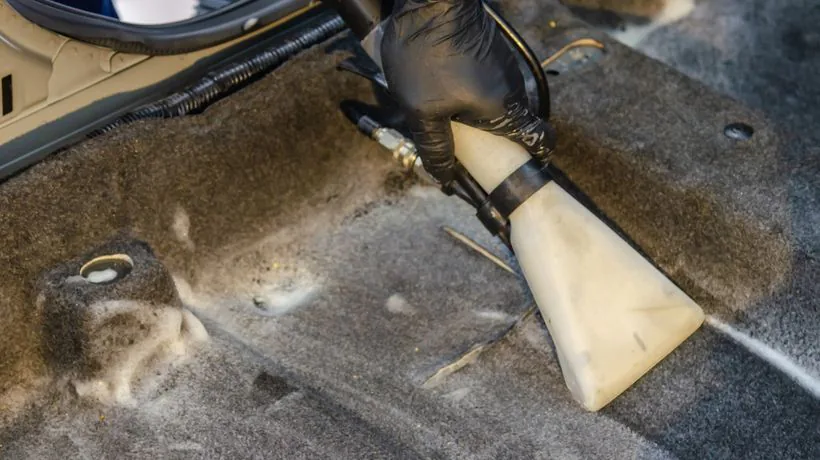
Vacuum loose spores gently first. Then apply a suitable anti-mould or anti-bacterial cleaner made for car upholstery, following the label. Work it into the fabric with a soft brush, let it dwell, then lift it away with a clean damp microfibre cloth or, ideally, a wet vacuum. Avoid soaking the seat, as trapped water simply feeds new mould.
Why steam works best
High-temperature steam cleaning is the most effective method because it kills spores on contact and penetrates deep into the fabric without leaving the seat soaking wet. It also sanitises and lifts the musty smell at the same time. This is what we use on every mould removal job, which is why the results last.
Stop it coming back
Treatment is wasted if the moisture source remains. Check for a leaking door or window seal, a blocked sunroof or pollen filter drain, or wet items left in the car. Keep the interior dry, crack a window in damp weather where safe, and act quickly on spills. If mould keeps returning, have the source diagnosed.
Mould keeps coming back?
EMobile Valeting brings professional, fully insured mobile valeting to your door across Derby, Nottingham and the East Midlands. No call-out fee.
See Mould Removal Get a Free Quote