You can usually tell a fabric convertible roof from a vinyl one in under a minute. Fabric looks and feels woven, like heavy canvas, and a drop of water darkens it as it soaks in. Vinyl feels smooth and slightly plasticky, often with a leather-like grain, and water sits on the surface as beads. The difference matters because each material needs its own cleaner and its own protection: fabric is proofed to repel water while still breathing, and vinyl is protected against UV and drying out. Here is how to check, and how to care for each.
How can you tell if your roof is fabric or vinyl?
Try these three checks on a clean, dry roof:
- Touch. Run your palm across it. Fabric has a textile feel, with visible threads in a weave, sometimes slightly fuzzy. Vinyl feels smooth and uniform, and may have an embossed grain pattern.
- Water drop. Put a few drops of water on an inconspicuous area and rub them gently with a fingertip. On fabric with tired proofing, the water darkens the material and soaks in. Vinyl stays dry underneath and the water smears over the surface.
- Edges. Look at a cut edge where the hood meets the frame or rear window. Fabric hoods often show a layered construction with a rubber membrane sandwiched between two textile layers. Vinyl usually shows a plastic coating over a fabric backing.
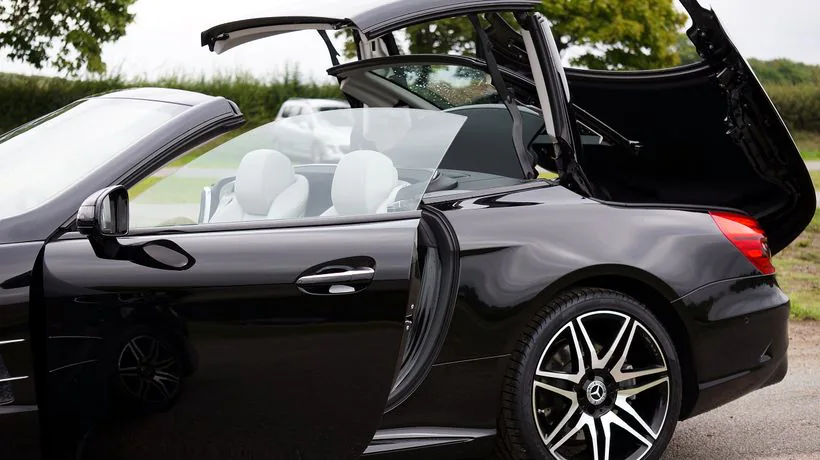
If you are still unsure, the vehicle handbook, a dealer or the hood supplier can confirm it from the specification. Some cars use a hardtop that folds, which is painted metal or composite and is washed like the rest of the bodywork.
How do you clean a fabric hood?
- Brush off loose dirt dry, working along the weave.
- Rinse with low-pressure water, then apply a dedicated fabric soft top cleaner and work it in with a soft brush in straight lines, not circles.
- Rinse until the water runs clear and no foam remains, because cleaner left in the weave attracts dirt.
- Let it dry completely, ideally overnight, before any proofing goes on.
Mazda's MX-5 maintenance guidance follows the same principles: brush off loose dust first, use a neutral detergent with plenty of water and a soft brush, rinse thoroughly, and avoid automatic and high-pressure washes.
How do you clean a vinyl roof?
- Rinse to remove grit, which can scratch vinyl if dragged across it.
- Use a vinyl-specific cleaner with a soft brush, paying attention to the grain where dirt settles.
- Rinse thoroughly and dry with a clean microfibre to avoid water spots.
- Finish with a vinyl protectant that contains UV blockers and dries without a greasy feel.
Vinyl tolerates a little more agitation than fabric, but it can crack if it is allowed to dry out, especially along fold lines.
What protection does each material need?
Fabric needs a water-repellent proofer made for soft tops. It lets water bead and run off while keeping the material breathable, and it usually needs topping up every 6 to 12 months or when water starts soaking in. Many proofers also include UV inhibitors to slow fading.
Vinyl is already waterproof, so a fabric proofer does nothing useful on it. It needs a protectant that blocks UV and keeps the material supple. Silicone-heavy tyre or dashboard dressings are a poor choice: they can attract dirt and may leave streaks on the rear window.
Which products and habits damage either type?
Mazda's guidance warns against wiping the top with alcohol, chlorine bleach or organic solvents such as thinners, which can cause discolouration or staining. It also says leaving a top folded while wet can make it deteriorate and grow mould. Other common mistakes:
- using household detergent or washing-up liquid, which can strip proofing;
- pressure washing close to the seams;
- putting a fabric proofer on vinyl, or vinyl dressing on fabric;
- polishing or waxing the car without masking the hood, leaving white residue in the weave.
Can a professional clean either type on your driveway?
Yes. On a mobile convertible roof cleaning visit, from £50, we identify the material first, then deep clean it with the right product, treat any mould or algae, and apply a hydrophobic sealant and UV protection suited to fabric or vinyl. The rear window and seals are cleaned as part of the job, and we bring our own water and power.
For the year-round routine between professional treatments, see our soft top maintenance calendar. If you can already see black or green spots, read our guide on dealing with mould on a convertible hood before you start scrubbing.
Sources
- Mazda: MX-5 owner's manual, Convertible Top (Soft Top) Maintenance
- Mazda: MX-5 owner's manual, Convertible Top (Soft Top)
Want your soft top restored and waterproofed?
EMobile Valeting brings professional, fully insured mobile valeting to your door across Derby, Nottingham and the East Midlands. No call-out fee.
See Convertible Top Treatment Get a Free Quote