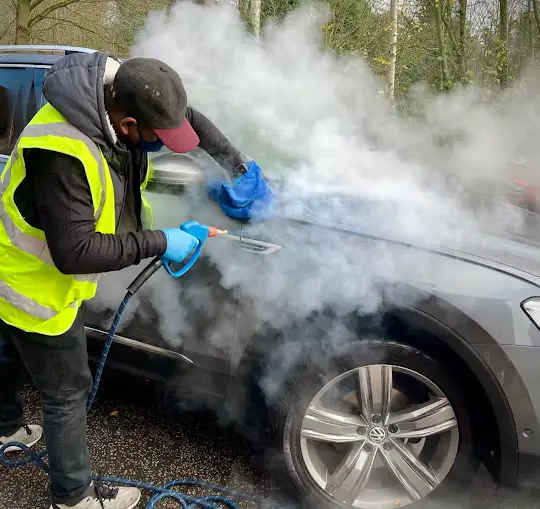
Yes, most dealerships valet a car before they sell it. Used stock is usually cleaned inside and out before it is photographed for the advert and parked on the forecourt, because a clean car looks better cared for and is easier to sell. What varies is how deep that clean goes. Some dealers prepare cars thoroughly; others give them a quick wash, a shine on the tyres and a scented interior. This guide explains what dealer preparation usually covers, what it can hide, and how to look at a freshly valeted car with a clear eye.
What does a dealer preparation valet usually include?
When a part exchange or auction car arrives, it normally goes through a preparation process before sale. The cleaning part of that typically involves:
- Exterior wash and dry, often followed by a quick spray wax or gloss enhancer.
- Wheels and tyres cleaned, with a tyre dressing to darken the rubber.
- Interior vacuum of seats, carpets and the boot, and a wipe of the dashboard and door cards.
- Glass cleaned inside and out.
- Fragrance in the cabin.
Higher value stock may get more: machine polishing to reduce swirls, upholstery extraction or smart repairs to bumpers and alloys. Lower value cars may get only the basics, because the margin does not justify more time.
Why do dealers bother valeting every car?
Presentation affects how quickly a car sells and how buyers feel about the price. A car with stained seats, a dusty dashboard and dull paint suggests it has not been looked after, even if the mechanical history is good. Photos also matter: most buyers first see a car online, and clean paint and a tidy interior photograph far better.
There is a practical reason too. Cleaning lets the dealer see the car properly and spot faults or damage that need sorting before sale. Whether presentation changes the price you get when selling privately is a separate question, covered in our guide on whether valeting increases resale value.
What can a quick forecourt valet hide?
Nothing about a valet is dishonest in itself, but some products make a car look better than its condition for a short time:
- Gloss sprays and glazes fill fine swirl marks so the paint looks deep under showroom lights. Several washes later, the swirls return.
- Heavy dressings on dashboards and trims hide fading and scuffs, and can leave a greasy film.
- Strong fragrance can mask smoke, pet or damp smells that come back once the scent fades.
- Wet or freshly cleaned carpets can hide stains, or a water leak that has soaked the underlay.
- Tyre shine makes rubber look new while the tread or sidewalls tell a different story.
How should you inspect a freshly valeted used car?
Citizens Advice recommends looking at a car in daylight, ideally when it is dry, because it is harder to spot damage if the car is wet. Showroom spotlights have a similar effect on paint. Try to view the car outside.
- Walk round at a low angle to see ripples, dents and mismatched panels.
- Look into door shuts, the boot lip and under the bonnet edge. A rushed valet often skips them, and overspray there can point to repairs.
- Lift the mats and boot floor. Damp carpet or a tide mark suggests a leak.
- Smell the car with the windows shut after it has been parked, not straight after a valet.
- Check the seat bolsters, steering wheel and gear knob for wear that should match the mileage.
- Run your hand along the tyres and check the tread rather than trusting the shine.
The Devon and Somerset Trading Standards guidance also suggests checking seats, paintwork and tyre tread, and test driving the car before you buy.
What rights do you have when buying from a dealer?
Buying from a trader gives you more protection than buying privately. Trading Standards guidance says a car bought from a trader must be of satisfactory quality and fit for purpose, you must not be misled about it, and you must not be pressured into buying.
There are limits. Trading Standards notes that a refund may not be due if you were told about a fault before buying, if the fault was obvious, or if it is fair wear and tear. That is why your own inspection matters, even when the car has been beautifully presented. If a dealer points out a mark or a worn seat, it has been disclosed.
Should you valet a car you have just bought from a dealer?
It is often worth it. A dealer valet is about presentation for sale, while a proper clean after purchase is about starting ownership with a car you know. A thorough valet shows the real condition of the paint once glazes wash off, deep cleans seats and carpets that may only have been vacuumed, and removes fragrance so you can tell whether any smell lingers underneath.
Our full interior and exterior valet starts from £80, and premium detailing with paint correction and protection starts from £150 if swirl marks reappear. If you are on the other side and selling, our checklist for getting a car ready to sell covers preparation step by step.
Sources
- Citizens Advice: Buying a used car
- Devon and Somerset Trading Standards: Buying a second-hand vehicle? Here's what you need to know
Selling privately and want to compete?
EMobile Valeting brings professional, fully insured mobile valeting to your door across Derby, Nottingham and the East Midlands. No call-out fee.
See Car Valeting Get a Free Quote