Yes, a Nottingham business can have its whole fleet valeted without a single vehicle leaving the premises. A mobile valeter arrives with their own water and power, works through cars and vans where they are parked, and hands back keys at the end of the visit. What makes it work well is the planning: agreeing where the vehicles will be cleaned, when they are free, and what each one needs. This guide covers the practical side for businesses in the city and its surrounding estates, from the first site check to pricing.
What does on-site fleet valeting in Nottingham actually involve?
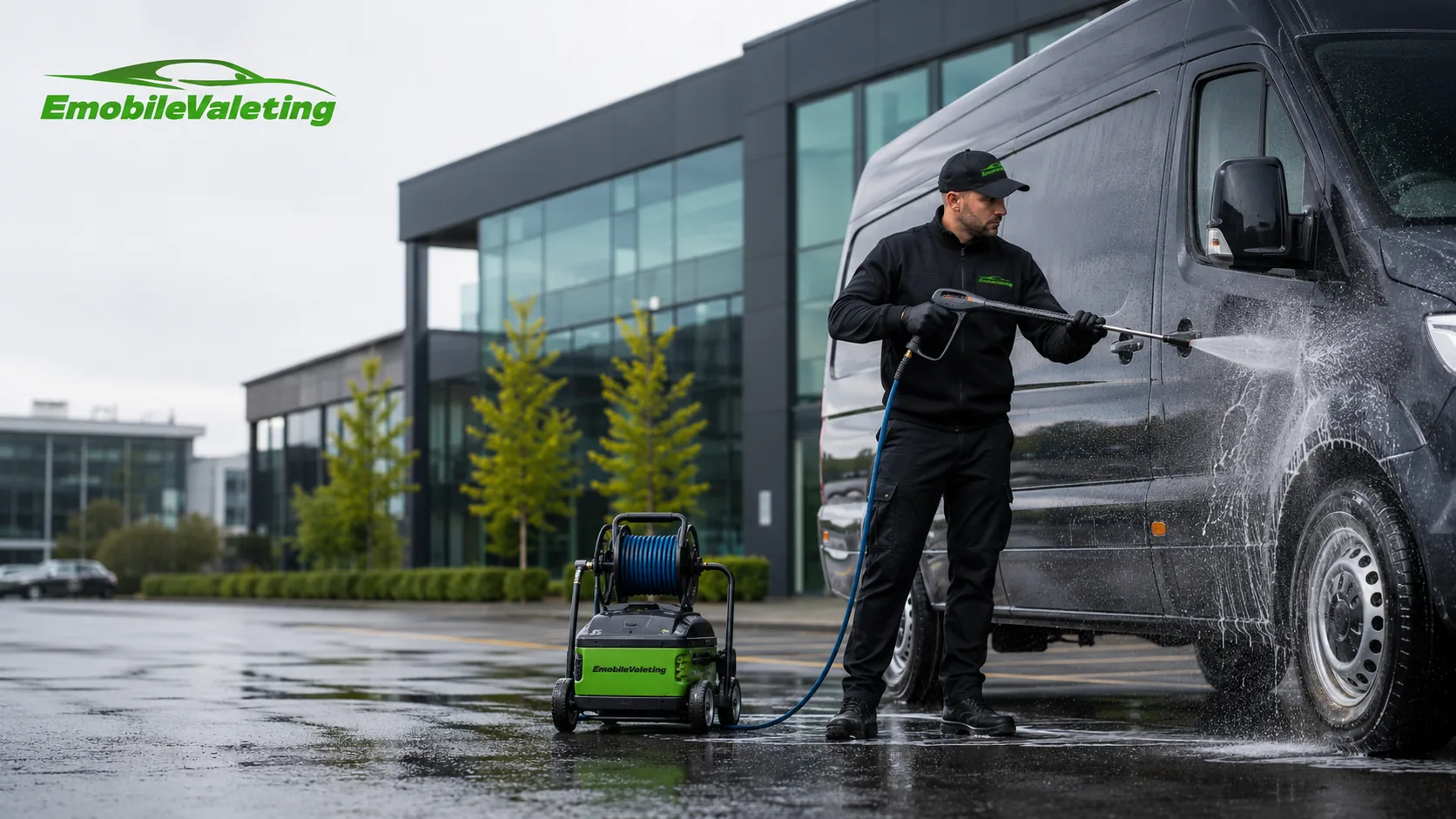
On a fleet visit we set up beside your vehicles, clean the exteriors by hand, then move inside each cab or cabin to vacuum, wipe down touch points and clean the glass. Vans get the load area swept or vacuumed if it is part of the agreed scope. Nothing needs plugging into your building, because we carry our own water and power, and there is no call-out fee for coming to you.
Our fleet valeting service in Nottingham covers pool cars, sales cars, liveried vans and mixed fleets. The same approach applies on business parks around the ring road as on a small yard behind a shop: if the vehicles can be parked with a little space around them, they can be cleaned there.
What do we need from you before the first visit?
A short site check saves time on every visit that follows. Before we start we ask for:
- A vehicle list: registrations, vehicle types and which ones are cars, small vans or larger panel vans.
- Space: roughly a car width either side of each vehicle so doors can open fully.
- Key handover: one named contact, or a key safe, so drivers are not chased for keys mid-shift.
- Access times: gate codes, barrier times and any areas we must keep clear for deliveries.
- Priorities: which vehicles face customers most and which are mostly parked.
We also ask whether drivers are expected to empty personal items first. A cab full of paperwork and tools takes longer, so a simple rule that drivers clear the cab the night before keeps the visit on schedule.
Where should vehicles be washed on your site?
This is the question most businesses have not thought about. GOV.UK guidance on pollution prevention for businesses lists vehicle washing as a source of polluted water and explains that surface water drains discharge directly to the environment, so only clean water should go into them. Wash water carrying detergent belongs in the foul drain, and only with your water company's permission.
In practice, it helps to know which gullies on your yard are surface water drains before we arrive. Where the layout makes exterior washing awkward, a visit can focus on interiors and glass, or use lower water methods on the bodywork. Agreeing this at the start avoids problems for you as the site operator.
How do you fit valeting around shifts and deliveries?
The best time to clean a fleet vehicle is when it would be standing still anyway. For most Nottingham businesses that means one of three patterns:
- Early in the working day for vehicles that stay on site, such as pool cars and spare vans.
- Rolling through the day where drivers return at staggered times, cleaning each vehicle as it comes back.
- Out of hours for vans that are out from morning to evening. Our usual hours are Monday to Saturday, 9am to 5pm, and weekend or out-of-hours slots can sometimes be arranged.
We work through the list in the order you set, so the vehicles going to customers first are ready first.
What does each vehicle get on a fleet visit?
Scope is agreed per vehicle type, not guessed on the day. A typical split looks like this:
- Exterior: hand wash, wheels and arches rinsed, glass, mirrors, lights and number plates cleaned.
- Cab or cabin: vacuum of seats, mats and footwells, wipe of dashboard, steering wheel, door handles and switches, and inside glass.
- Load area (vans): loose debris removed and floor vacuumed or swept, with heavier cleaning quoted separately.
Clean lights, plates and windows are not cosmetic. The Highway Code says they must be kept clean and clear, which matters for vehicles driven for work every day. HSE guidance adds that employers must manage the risks to staff who drive for work, and that a risk assessment should look at the vehicle as well as the journey and the driver. For a step by step on cabs and load areas, see our guide on how to valet a van interior.
How much does fleet valeting cost in Nottingham?
Our fleet valeting starts from £25 per vehicle. The figure for your business depends on:
- the mix of cars, small vans and larger vans
- how dirty the vehicles are between visits
- whether load areas and interiors are included every time
- how often we come, since regular visits keep each clean quicker
A one-off clean before an audit or event is quoted the same way. If you are weighing up a regular arrangement, our article on the benefits of a fleet valeting contract sets out what to agree in writing. Full details of the service are on our fleet valeting page.
Sources
- GOV.UK: Pollution prevention for businesses
- GOV.UK: The Highway Code, Annex 6. Vehicle maintenance, safety and security
- HSE: Employers, driving and riding safely for work
Run a fleet in Nottingham?
EMobile Valeting brings professional, fully insured mobile valeting to your door across Derby, Nottingham and the East Midlands. No call-out fee.
See Fleet Valeting Get a Free Quote