To remove a fuel or diesel smell from a car, first make the area safe, then absorb as much of the spill as possible, clean the fabric with a degreaser and extract the residue so it does not dry back in. Fuel is oily, so plain water and air freshener just spread it and mask it. Petrol evaporates fairly quickly once cleaned up; diesel is oilier and slower, which is why diesel smells tend to linger. If you can smell fuel and have not spilt any, stop cleaning and get the car checked, because a leak is a safety issue, not a valeting one.
Is a fuel smell in the car dangerous?
It can be. UK Health Security Agency information describes petrol as highly flammable and able to cause fire or explosions if not handled appropriately, and says diesel and its fumes carry the same risk. It also notes that breathing in petrol or diesel fumes may cause dizziness, drowsiness and headaches. In a closed car, vapour from even a small spill builds up quickly.
- Open all the doors and the boot and let the car air before you start.
- Do not smoke, use a lighter or run anything that sparks nearby.
- Do not run the engine or heater with the car shut to dry it.
- If fuel got on skin or clothes, UKHSA advises removing soiled clothing and washing skin with lukewarm soapy water for 10 to 15 minutes, then seeking medical advice.
How do I deal with a fresh spill?
- Remove the source. Take out the leaking can and anything that has soaked up fuel.
- Absorb, do not wipe. Cover the patch generously with clay cat litter, sawdust or bicarbonate of soda and press it in. Leave it for several hours, ideally with the doors open.
- Remove the absorbent with a dustpan, then vacuum. Bag fuel-soaked material and let it air outside away from buildings before disposal, following your council's guidance for hazardous waste.
- Blot what remains with kitchen roll until no more fuel transfers.
Avoid pouring water on a fresh spill. Fuel floats on water and the spill spreads wider across the carpet.
How do I clean fuel out of carpet and upholstery?
- Apply a degreasing interior cleaner or a diluted washing-up liquid solution, which cuts through oil. Test first on a hidden area.
- Agitate gently with a soft brush, working from the outside of the patch inwards.
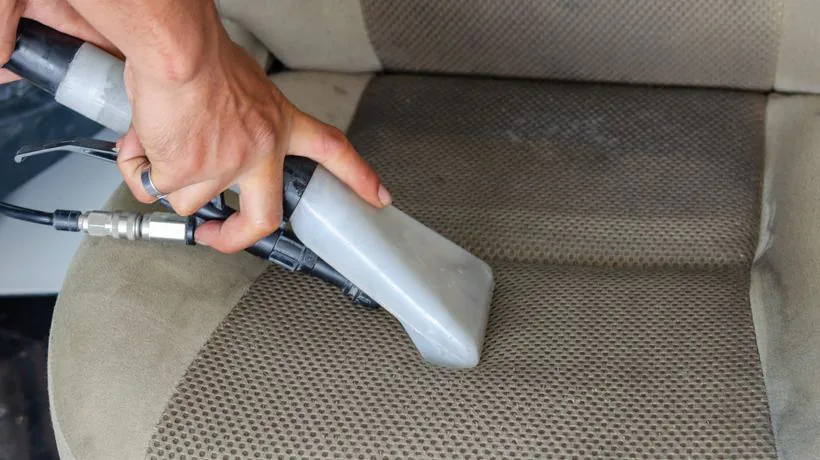
- Extract or blot with clean water. A wet and dry vacuum is far more effective than towels, because it pulls dissolved fuel out of the underlay.
- Repeat until the smell close to the fabric is faint, then dry the area completely with the car open on a dry day.
- Absorb what is left by leaving a bowl of bicarbonate of soda or a charcoal bag in the car for a few days.
Check the boot floor beneath the carpet. Fuel often runs into the spare wheel well, where it pools out of sight and keeps the smell going.
Why is diesel harder to get rid of than petrol?
Petrol is a light, volatile fuel, so once the liquid is absorbed most of what remains evaporates within days of airing. Diesel is heavier and oilier and evaporates much more slowly, so it stays in fibres and foam, and every warm day releases more smell. It also leaves a greasy film on plastics. That is why diesel spills almost always need degreasing and extraction rather than just airing, and why a diesel spill on the rubber backing of a boot liner may mean replacing the liner.
What if I can smell fuel but nothing was spilt?
Treat it as a possible fault, not a cleaning job. Common causes include a leaking fuel line, a loose filler cap, a damaged seal on the fuel pump access under the rear seat, or fuel on your shoes from the forecourt. If the smell is strong, gets worse while driving, or you can see wet patches under the car, do not drive it; call a garage or breakdown service. If it is only faint and you recently refuelled, check your shoes and the footwell mats first.
When should I get it professionally cleaned?
If the smell is still there after the steps above, the fuel has reached the underlay or seat foam. Once the car has been aired and the fumes have cleared, a professional steam and extraction clean uses a degreasing pre-treatment on the affected fabric, then steam and extraction to lift the oily residue from deep in the fibres, followed by the hard trim around it. Steam cleaning starts from £60. If a spill has left the whole cabin smelling stale, a full interior and exterior valet from £80 refreshes everything. For more on why extraction matters on fabric, see how steam and shampoo compare on interiors. For other stubborn cabin smells, our cigarette smell guide covers the same principle of removing residue rather than masking it.
Sources
Stubborn fuel smell in your car?
EMobile Valeting brings professional, fully insured mobile valeting to your door across Derby, Nottingham and the East Midlands. No call-out fee.
See Steam Cleaning Get a Free Quote