A car smells musty because something inside it is staying damp long enough for mould and bacteria to grow. The four usual sources are the air-conditioning system and cabin filter, wet carpets or underlay, damp belongings left in the car, and mould growing on seats, the boot floor or the headliner. You can usually tell which one it is from when the smell appears and where it is strongest. Working that out first saves you paying for the wrong fix, so this guide is all about diagnosis.
What actually makes the musty smell?
The smell is produced by mould and bacteria as they grow on damp material. Fabric, foam, carpet underlay and dust all hold moisture, and a parked car with the windows shut traps humid air, especially through a British autumn and winter. Remove the moisture and the growth slows; leave it and the smell builds.
So every diagnosis comes back to the same question: where is the damp, and why is it not drying out?
Does the smell come from the vents when the fan starts?
Switch the engine on with the fan off, sit for a moment, then turn the fan up. If a wave of musty air comes out of the vents and then fades, the source is very likely inside the ventilation system.
The RAC explains that musty air-con odours come from bacteria, mould and moisture building up inside the ventilation system, and that running the air-con regularly throughout the year, even in winter, helps prevent this. It suggests an antibacterial treatment or a new cabin filter once the smell has started. A cabin filter that has not been changed for a long time, or one that got wet, is a common culprit and is listed in your service schedule.
Is the smell there all the time, even with the fan off?
A constant smell that is strongest when you first open the doors after the car has been shut up usually means something in the cabin itself is damp. Check, in this order:
- Under the mats. Lift each one and press a dry tissue into the carpet below.
- The boot well and spare wheel area, which stays hidden and collects water from a leaking boot seal or light cluster.
- Seats and belts for white, grey or green spots, especially rear seats that rarely get used.
- The roof lining for tide marks near the sunroof or pillars.
Visible mould anywhere means the cabin has been damp for a while. Mould can aggravate allergies and asthma; see a GP for symptoms.
Does it get worse after rain or a car wash?
If the smell comes and goes with the weather, water is probably leaking in. The AA points out that seals around doors, windows and the boot deteriorate with age, and that blocked sunroof and door drains let water back up into the cabin. A wet patch that appears after rain and dries out over a few dry days is the classic pattern.
Finding and fixing that entry point is its own job, and our guide on tracking down water leaks into a car walks through each check.
Could it be something left in the car, or something else entirely?
Before suspecting a leak, empty the car. The RAC advises removing wet clothing, shoes and towels promptly, because they raise humidity inside the car. Gym kit, a damp dog blanket, a forgotten umbrella, children's car seats with spilt drinks in the base and wet floor mats are all common sources.
Some smells are not musty at all. A sweet smell, sometimes with a greasy film on the inside of the windscreen, can mean coolant from a leaking heater, which the AA says needs a mechanic. A fuel or burning smell should also go straight to a garage.
What should you do once you know the cause?
- Vents only: replace the cabin filter, have the air-con system serviced and treated, and run it regularly.
- Damp belongings: remove them, dry the cabin with the heater and air-con on, and air the car on a dry day.
- Leak: have the seal or drain fixed, then dry the carpets and underlay properly.
- Visible mould: small patches can be cleaned carefully; widespread growth needs professional mould treatment, from £80.
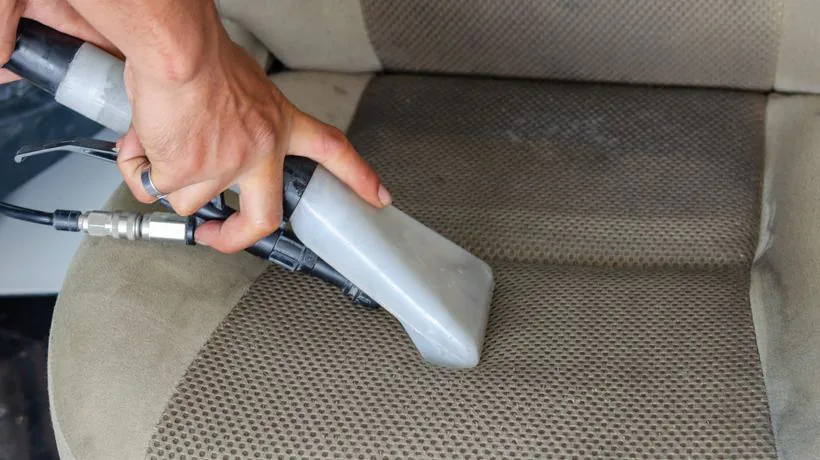
- Lingering stale smell with no mould: a deep clean of the fabrics usually helps. Our interior steam cleaning, from £60, uses high-temperature steam that greatly reduces the bacteria behind the smell.
Air fresheners are not on this list. They mask the smell and stop you noticing whether it is getting worse.
Sources
- RAC: Should you use your air-con in the winter?
- The AA: Why is my car leaking water?
- RAC: How to stop your car windscreen freezing on the inside
- GOV.UK: Understanding and addressing the health risks of damp and mould in the home
Can't shift a musty smell?
EMobile Valeting brings professional, fully insured mobile valeting to your door across Derby, Nottingham and the East Midlands. No call-out fee.
See Mould Removal Get a Free Quote