Valeting is cleaning. A full valet removes dirt from every surface inside and out and finishes the paint with wax, leaving the car clean, fresh and protected. Detailing is restoration. It goes beneath the dirt to the paint itself, removing bonded contamination and polishing out swirl marks and light scratches before sealing the finish. A valet makes a car clean; detailing changes how the paint looks under light. Most cars only need valeting most of the time, and detailing occasionally. Here is how to tell which yours needs.
What does valeting mean in practice?
In the UK, valeting has long meant a professional clean. Our full valet covers:
- a deep vacuum of carpets, seats and the boot
- dashboard, door cards, centre console and air vents wiped down
- glass cleaned inside and out
- a two-bucket hand wash with paint-safe mitts, rinsed and dried with microfibre
- alloy wheels cleaned of brake dust and tyres dressed
- a carnauba wax applied to the paint
It takes around 1.5 to 2.5 hours depending on size and condition. The goal is a clean, tidy, protected car. It does not attempt to remove scratches, and wax will only hide very fine marks briefly. See the full car valeting service details.
What does detailing involve?
Detailing starts with a careful wash, then deals with what washing cannot shift and what has damaged the clear coat:
- Decontamination. Iron fallout remover and a clay bar lift particles bonded to the paint, which you can feel as roughness after washing. Our guide to clay bar treatment explains that step.
- Inspection. The paint is checked under strong light to see swirls, holograms and scratches.
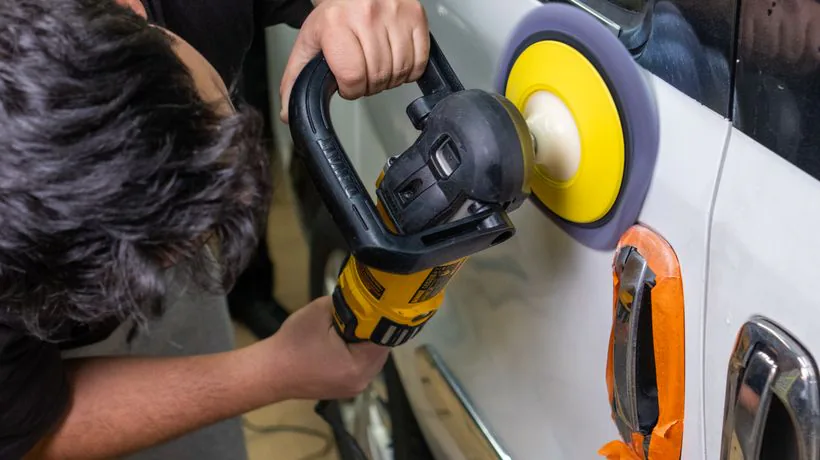
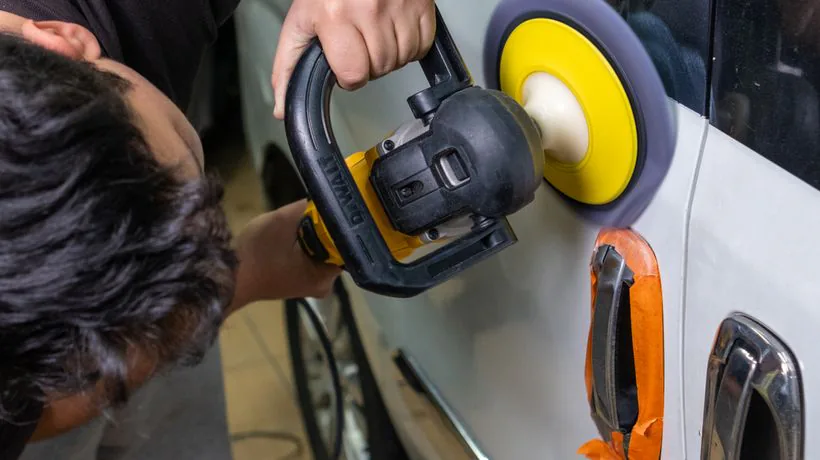
- Machine polishing. A polisher and abrasive compound level a tiny amount of clear coat so fine defects stop scattering light. Deep scratches through the clear coat cannot be polished out.
- Protection. A sealant or wax is applied to the corrected finish.
Detailing can include interior work such as steam cleaning and leather care, but the defining difference is the paint correction. More on that in what paint correction is.
Where do swirl marks and dull paint come from?
Most swirls are caused by washing and drying, not by driving. Grit dragged across paint by a sponge, a gritty cloth or a brush wash leaves fine circular scratches. Carbuyer recommends a microfibre noodle or mitt with long strands rather than a sponge, because dirt collects between the strands instead of being rubbed over the surface, and it warns that household cleaners can strip the protective wax layer. Contamination does damage too. Halfords notes that bird droppings are strongly acidic, with a pH of about 3.5 to 4.5, and begin affecting paint almost immediately, which can leave etched marks a wash will not remove.
When is detailing worth the extra cost?
Detailing is good value when there is a visible problem a valet cannot solve, or when the long-term condition of the car matters:
- In direct sun the paint shows a web of circular scratches.
- The finish looks flat or hazy even straight after a wash.
- The paint feels rough after washing.
- You are about to sell a car where paint condition affects the offer.
- You have bought a used car and want to start from a corrected finish.
It is less worthwhile on a car with deep scratches and chips that need paint repair, or on a car you are about to part-exchange where the dealer will prepare it anyway.
How do the costs compare?
Our full valet starts from £80. Premium detailing, meaning paint correction and protection, starts from £150, with the final price depending on the size of the car, the paint condition and how much correction is needed. We confirm the price after seeing photos or the car itself. We do not apply ceramic coatings or paint protection film; our protection is a wax or sealant finish. If you are deciding between protection types, see wax vs sealant vs ceramic.
How do valeting and detailing fit together over a year?
A sensible pattern for a car you care about is regular washes, a full valet every few months, and detailing only when the paint needs it. Once the paint has been corrected, good washing habits keep it that way for much longer. The AA suggests reapplying wax every couple of months rather than at every wash, which is easy to fold into a valet visit. In practice, a well-washed car may go a long time between detailing sessions.
Sources
- Carbuyer: Best car cleaning tips: how to wash your car
- Halfords: How to get bird poo off a car
- The AA: How to wash your car
Not sure which your car needs?
EMobile Valeting brings professional, fully insured mobile valeting to your door across Derby, Nottingham and the East Midlands. No call-out fee.
View All Services Get a Free Quote