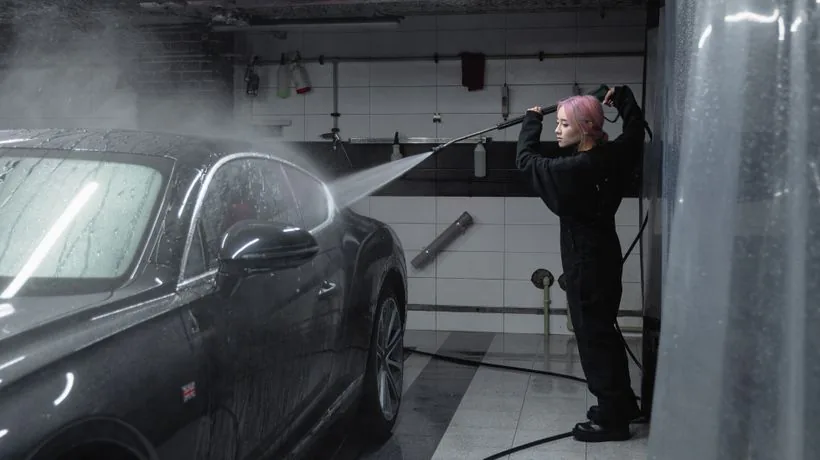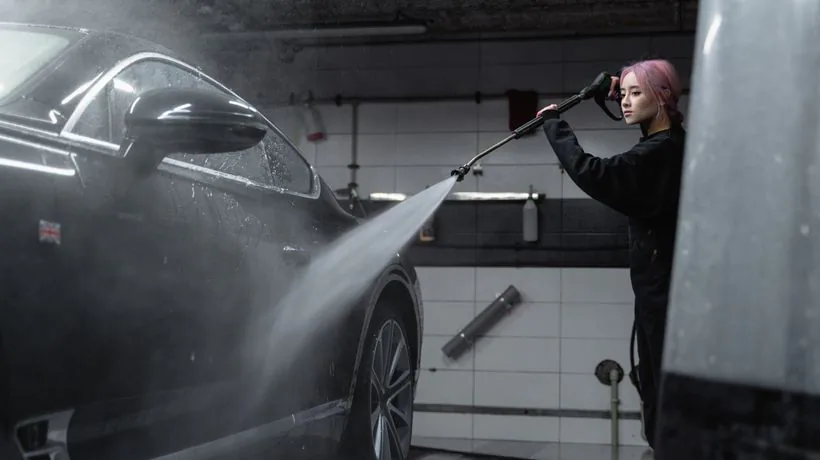
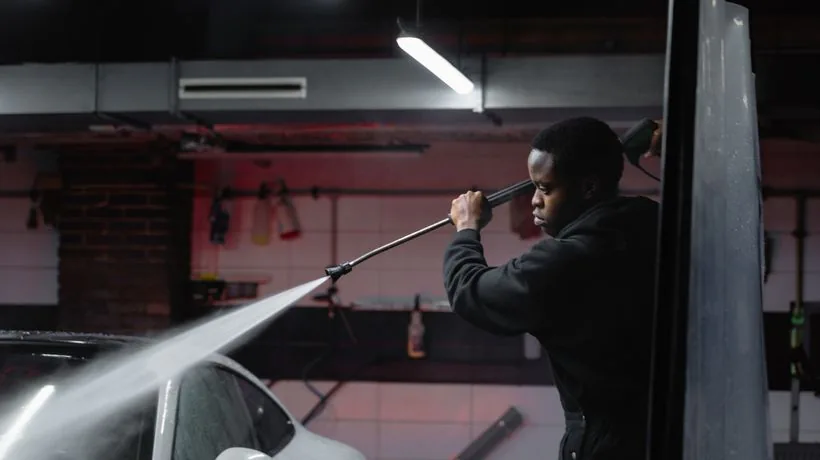
A careful hand wash is the safer way to clean a car's paint. Fresh, clean wash media, a pre-wash to remove loose grit and drying with a soft towel all reduce the risk of the fine swirl marks that show up in sunlight. Automatic washes are quicker, but brush and cloth machines touch every car that goes through, and touchless ones trade contact for stronger chemicals. The catch is that a hand wash is only as good as the person doing it. A rushed one can do as much harm as a machine.
How do automatic car washes mark paint?
Most UK automatics are one of three types, and each carries a different risk:
- Brush washes use rotating bristles. If the car before yours was muddy, some of that grit can stay in the bristles and be swept across your bodywork.
- Soft cloth or foam washes are gentler, but the strips still make contact with every panel and depend on the site keeping them clean.
- Touchless washes use high-pressure water and detergent only. Because nothing scrubs, they lean on stronger chemistry, which can wear wax or sealant faster and still leave a thin traffic film.
The marks themselves are tiny scratches in the clear coat. On a silver car you may never notice them. On black or dark blue paint under low winter sun they look like a spider's web around every light reflection.
When is a hand wash worse than a machine?
A hand wash is not automatically gentle. These habits cause just as many swirls:
- One bucket, so every rinse puts grit back into the wash water.
- A traditional sponge, which holds dirt against its flat face.
- The same mitt used on wheels, sills and then the bonnet.
- Dropping a mitt on the ground and carrying on.
- Drying with an old bath towel or a chamois dragged dry across the paint.
Forecourt hand washes working against the clock can fall into several of these at once. Washing-up liquid is another common shortcut. The AA notes it is less effective than car shampoo and can strip wax protection, although it should not be strong enough to remove or dull the paint itself.
What does a safe hand wash look like?
The aim is to remove as much grit as possible before anything touches the paint, then make each contact gentle. In practice:
- Clean the wheels and tyres first with separate brushes and a separate bucket.
- Rinse the whole car, then use a snow foam or pre-wash to soften and lift loose dirt.
- Wash from the top down with a clean microfibre mitt, using one bucket of shampoo and one of clean rinse water. Our guide to the two-bucket wash method explains why this matters.
- Rinse each section before soap dries on it.
- Dry with a plush microfibre towel, patting or gliding rather than scrubbing.
The AA also points out that drying by hand, rather than relying on a machine's blow dryer, reduces water marks and gets into gaps the dryers miss. One thing staffed sites handle better than a driveway is drainage: NetRegs guidance says vehicle wash run-off must not enter surface water drains, and recommends biodegradable, phosphate-free detergents if you wash at home.
Which cars should stay out of automatic washes?
Some vehicles are better kept away from machines altogether:
- Soft-top convertibles, where brushes and high pressure can lift fabric fibres or force water past seals.
- Matt paint and vinyl wraps, which can be marked by brushes and polished unevenly by waxy rinse cycles.
- Cars with fresh paint repairs, until the bodyshop says the paint has fully cured.
- Vehicles with roof bars, boxes, fixed aerials or loose trim that can catch in the brushes.
- Classic cars with single-stage paint, which is softer and marks more easily.
Pressure needs care with a hand wash too. The AA warns that close-range pressure washing can damage plastic parts such as bumpers and door mouldings, so keep the lance at a sensible distance.
How can you lower the risk if you use an automatic?
Sometimes a machine is the only practical option, especially for getting salt off in January. To reduce the risk:
- Choose a touchless programme where one is available.
- Rinse heavy mud off at a jet wash bay first so the brushes have less grit to work with.
- Fold mirrors, remove or lower aerials and take off roof boxes.
- Avoid the wax add-on if your car already has a sealant, as it can leave smears.
- Dry the car with a clean microfibre towel afterwards to avoid spotting.
If the paint already shows swirls, a wash will not remove them. That needs machine polishing, which our guide on removing scratches and swirl marks covers.
What does a professional hand wash add?
On a visit we follow the safe method above every time: wheels first with dedicated kit, a pre-wash, a two-bucket contact wash with clean mitts, and drying with fresh towels. We then finish the paint with a wax or sealant, which makes the next wash easier because dirt clings less. An exterior wash starts from £30, and a full interior and exterior car valet starts from £80. For paint that already has swirls, premium detailing (paint correction and protection) starts from £150.
Sources
Want a safe wash that protects your paint?
EMobile Valeting brings professional, fully insured mobile valeting to your door across Derby, Nottingham and the East Midlands. No call-out fee.
See Car Valeting Get a Free Quote