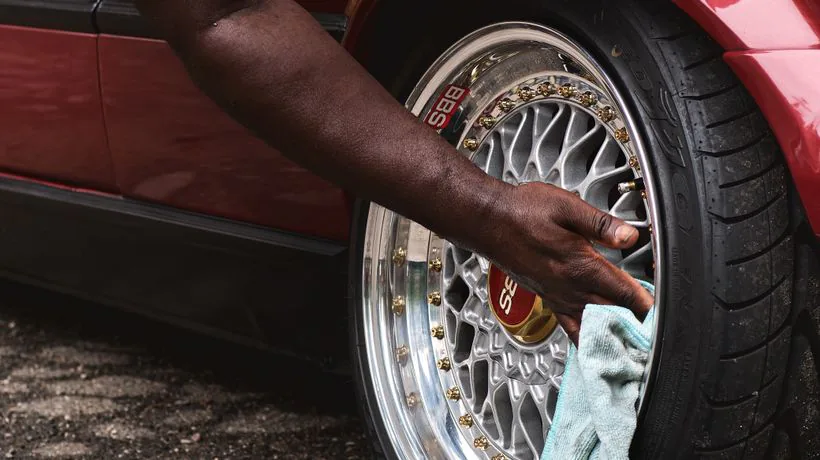
To clean alloy wheels safely, wait until they are cool, rinse off loose dirt, spray on a pH-balanced wheel cleaner, work it into the faces, spokes and barrels with soft brushes, then rinse and dry. Use a bucket, brushes and mitt that never touch your paintwork. Stubborn brown or orange specks are usually embedded iron particles from the brakes, which an iron fallout remover dissolves without scrubbing. Finish with a wheel sealant so the next clean is quicker. Here is the method in detail, plus what to avoid.
What is brake dust, and why does it stick so well?
Every time you brake, the pads grip the discs and both wear away slightly. The result is a fine, hot dust made of friction material and metal particles from the disc, which settles on the nearest surface: your wheels. Because it lands hot, it can bake onto the lacquer, and sharp iron fragments can lodge in the surface and later rust into orange specks.
It is more than a cosmetic nuisance. The Committee on the Medical Effects of Air Pollutants, which advises the UK government, notes that brake wear particles contain metals such as copper, barium and antimony, which is a good reason to wear gloves when cleaning heavily soiled wheels. The same statement says regenerative braking in electric cars may reduce brake wear, though this is not yet verified. Front wheels usually look worst because the front brakes do most of the work.
What kit do you need to clean alloy wheels?
- A dedicated wheel bucket, plus a mitt or sponge kept only for wheels.
- A pH-balanced wheel cleaner for routine cleans.
- An iron fallout remover for embedded particles. Most change colour, often to purple, as they react.
- Soft brushes: a soft-bristled face brush, a long barrel brush to reach behind the spokes, and a small detailing brush for wheel nuts and badges.
- A stiffer tyre brush used only on rubber.
- Nitrile gloves and eye protection. HSE guidance treats any product with a hazard symbol on its packaging as a hazardous substance, and gives rubber gloves and eye protection as examples of sensible controls.
- Microfibre cloths for drying, and a wheel sealant or wax to finish.
How do you clean alloy wheels step by step?
- Let the wheels cool. Cleaner sprayed on hot wheels dries almost instantly and can stain the finish. After a drive, wait until you can rest your hand on the wheel comfortably.
- Do one wheel at a time so nothing dries before you rinse.
- Rinse the wheel, tyre and arch to remove loose grit.
- Spray the wheel cleaner over the face, inside the barrel and across the tyre wall. Leave it for the time on the label.
- Agitate. Brush the barrel first, then the spokes, then the face, then the wheel nuts. Scrub the tyre wall with the tyre brush.
- Rinse thoroughly, including behind the spokes and around the valve.
- Treat any remaining specks with iron fallout remover, let it react, then rinse again.
- Dry the wheel with a clean microfibre so water spots do not form.
- Protect with a wheel sealant or wax applied to a clean, dry wheel.
Wheels are usually cleaned before the bodywork, so splashes of dirty water and brake dust do not land on freshly washed paint. The AA likewise recommends keeping a separate cloth, brush or sponge for the wheels.
What should you avoid when cleaning alloys?
- Acid-based wheel cleaners at home. They work fast, but on damaged lacquer, polished or chrome finishes they can etch and cloud the surface, and they are harsh on skin and eyes.
- Wire wool, scouring pads and stiff bristles, which scratch lacquer and polished metal.
- Household cleaners or oven cleaner, which are not designed for wheel finishes.
- Leaving products to dry on the wheel, especially in sun.
- Using wheel kit on paint. Brake dust particles are sharp and will scratch bodywork.
Do different wheel finishes need different care?
Painted and lacquered alloys, the most common type, cope well with pH-balanced cleaners and soft brushes. Diamond-cut wheels have a machined bright face under a thin clear lacquer. If that lacquer is chipped, moisture creeps underneath and causes white, spidery corrosion, so avoid strong chemicals and check the edges regularly. Polished alloys without lacquer and chrome wheels need the gentlest products and a dedicated metal polish. Matt or satin wheels should not be waxed or polished, as that adds an uneven sheen. If you are unsure what you have, use a pH-balanced cleaner and test on a small area first.
How does the season change wheel cleaning?
In winter, road salt mixes with brake dust into a grey, corrosive paste that clings inside the barrels. A weekly rinse helps, and a sealant applied in autumn makes that rinse more effective. Our guide on protecting your car from road salt covers arches and underbody as well. In summer, wheels get hotter and products dry faster, so clean early in the day and work one wheel at a time.
When should you call a professional?
If the wheels have months of baked-on dust, orange contamination that will not shift, or you would rather not handle the chemicals, a professional clean is worth it. On every mobile car valet we clean wheel faces, barrels and tyres with dedicated wheel kit, and use iron fallout remover where needed. Our guide to iron fallout remover explains that step in more depth. We do not repair kerb damage or refurbish corroded wheels, which is specialist alloy repair work.
Sources
- COMEAP: Statement on the evidence for health effects associated with exposure to non-exhaust particulate matter from road transport
- HSE: Control of substances hazardous to health (COSHH)
- The AA: How to wash a car
Want your alloys gleaming?
EMobile Valeting brings professional, fully insured mobile valeting to your door across Derby, Nottingham and the East Midlands. No call-out fee.
See Car Valeting Get a Free Quote