To clean car air vents, loosen the dust with a soft detailing brush while holding a vacuum nozzle next to the vent, then wipe each slat with a foam swab or microfibre cloth that is only slightly damp with interior cleaner. Work with the engine off and the fan switched off so dust is not blown back into the cabin. The vent faces are only the visible part of the system. Air quality inside the car depends much more on the pollen filter and the air conditioning, which are covered further down.
Why do car vents get so dusty?
Vents sit in the airflow, so anything carried in the cabin air settles on the slats: road dust, pollen, pet hair, skin flakes and fibres from clothing and seats. In cars where people smoke or vape, a sticky film builds up and holds dust even more firmly. The slats are also close together and angled, so a cloth swiped across the front barely touches the dirt between them.
Dusty vents look neglected on an otherwise clean dashboard, and every time the fan starts, some of that loose dust is blown back towards the occupants.
What tools do you need to clean car vents?
- A soft detailing brush. A natural bristle or synthetic paintbrush around 15 to 25mm wide fits between most slats.
- A vacuum with a crevice tool or a small brush attachment.
- Foam swabs or cotton buds for the narrow gaps.
- Microfibre cloths, including a thin one you can wrap over a plastic card to reach between slats.
- A mild interior cleaner diluted as directed.
- Optional compressed air, used in short bursts with the vacuum held close.
Avoid stiff brushes and metal tools, which scratch soft plastic and chrome effect finishes on vent surrounds.
How do you clean car vent slats step by step?
- Switch off the fan and open the vent fully so the slats are as far apart as possible.
- Brush and vacuum together. Sweep the brush between each slat, holding the vacuum nozzle just below to catch the dust.
- Turn the slats to the other extreme and repeat, so both faces are reached.
- Wipe each slat with a foam swab or wrapped cloth that is barely damp with interior cleaner. Don't let any liquid drip.
- Dry with a clean part of the cloth.
- Clean the surround with a damp microfibre, then buff dry.
Never spray cleaner, air freshener or water directly into the vents. Liquid can run into the ducts and electrical parts behind the dashboard and leave damp where you can't dry it. Vent cleaning fits naturally into a full dashboard clean; see our guide to cleaning a dashboard without a greasy shine.
What does the pollen filter do, and when should it be changed?
Most modern cars have a cabin air filter, often called a pollen filter, that cleans the air before it reaches the vents. It traps dust, pollen and other particles. The NHS hay fever page advises using a pollen filter in the air vents of your car, if you have one, as one of the ways to reduce symptoms, along with keeping windows shut as much as possible.
Filters clog over time, which reduces airflow and can contribute to musty smells. Replacement intervals vary by car, so check your service schedule; many are changed at each annual service. If you drive on dusty roads or suffer with hay fever, ask your garage to check it before the pollen season, which the NHS describes as running from late March to September. Pollen and dust can aggravate allergies and asthma; see a GP for symptoms.
Why do my car vents smell musty?
A damp, musty smell when you first switch the fan on usually comes from the air conditioning evaporator and ducts behind the dashboard, where condensation collects and dust gathers. Cleaning the slats won't reach this. Helpful habits include:
- Running the air conditioning regularly, including in winter, because it dries the air and keeps the system working.
- Switching off the air conditioning a few minutes before the end of a journey while leaving the fan on, to help dry the system.
- Making sure the pollen filter is not clogged or damp.
Clear vents also matter for safety. The Highway Code (Annex 6) includes demisters in the list of equipment that should be working, and dusty, blocked vents make the windscreen slower to clear. If the smell persists, our guide to why a car smells musty helps pin down the cause.
When should the vents and cabin be cleaned professionally?
If vents are coated in sticky smoke residue, the whole interior smells stale, or there is visible mould on the vents or nearby trim, a professional clean is the better route. We detail each vent with brushes and air, clean the surrounding trim and treat the cabin surfaces.
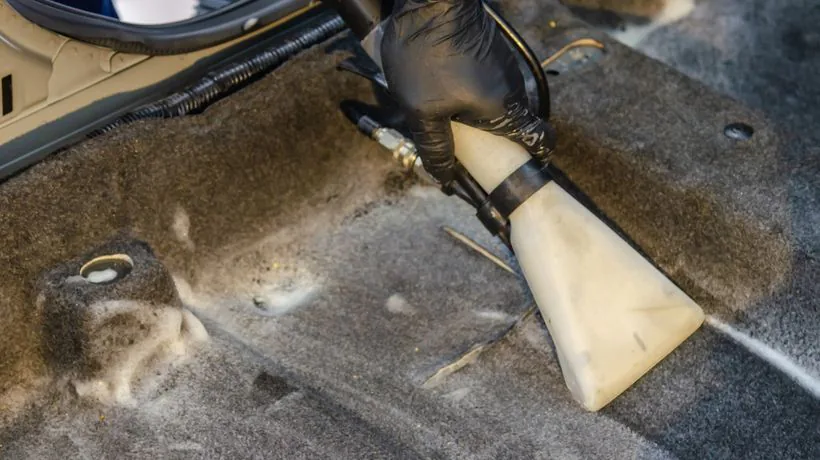
Interior steam cleaning from £60 is well suited to vent surrounds and the fabric surfaces that hold odour, and it reduces bacteria and dust mites on the surfaces it reaches. Vents are also cleaned as part of our full interior and exterior valet from £80. Problems inside the air conditioning system itself, such as a blocked evaporator drain, need a garage.
Sources
Stale air in your car?
EMobile Valeting brings professional, fully insured mobile valeting to your door across Derby, Nottingham and the East Midlands. No call-out fee.
See Steam Cleaning Get a Free Quote