To clean a car interior at home, empty the car, brush and vacuum every surface from the roof down, wipe the hard trim with a mild interior cleaner sprayed onto a microfibre cloth, clean the seats and carpet with as little liquid as you can, then finish with the glass and refit the mats. Working that way gets the dusty, gritty part of the job done before anything gets damp.
What kit do you need to clean a car interior?
- A vacuum with a crevice tool and a soft brush attachment.
- Soft detailing brushes for vents, switches and stitching. A clean, soft paintbrush works.
- Plenty of microfibre cloths, with two kept only for glass.
- A mild interior cleaner made for car plastics and vinyl, or a weak mix of mild soap and warm water.
- An upholstery cleaner for cloth and carpet, and a leather cleaner if you have leather.
Some products are best kept out of the car altogether. Nissan's owner's manual for the Leaf says not to use wax or silicone based products anywhere in the interior, never to use benzine, thinner or similar solvents, and not to use chlorine-based cleaners. Which? adds that some strong cleaning products could damage upholstery, plastic or leather. Try anything new on a hidden spot first, such as the lower edge of a door card.
How do you clean a car interior, step by step?
- Park in shade and switch everything off. Cleaner dries on warm plastic before you can wipe it, and dark screens show smears.
- Empty the cabin, including the door pockets, glovebox and boot, and lift out the mats.
- Dry clean from the top down. Brush dust out of vents and seams just ahead of the vacuum nozzle, then vacuum the seats, carpet and boot, moving each front seat to both ends of its runners.
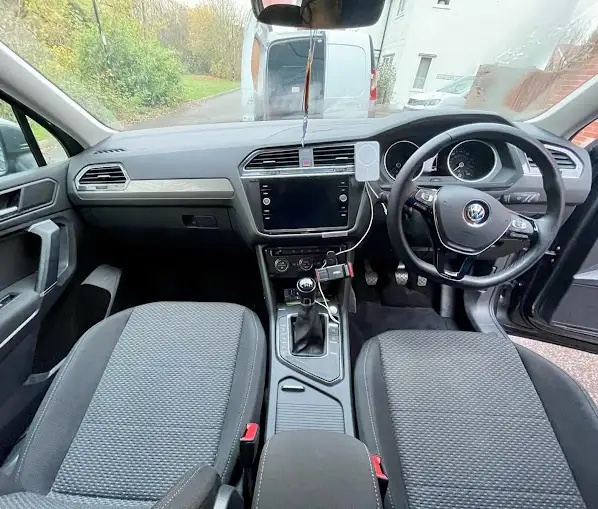
- Wipe the hard surfaces: dashboard, console, door cards, handles, steering wheel and gear lever.
- Clean the seats, then the carpet and boot floor, then the mats outside the car.
- Clean the glass and mirrors last.
- Vacuum once more, put the mats back on their clips and leave the doors open while the cabin airs.
How do you clean the dashboard, console and door cards?
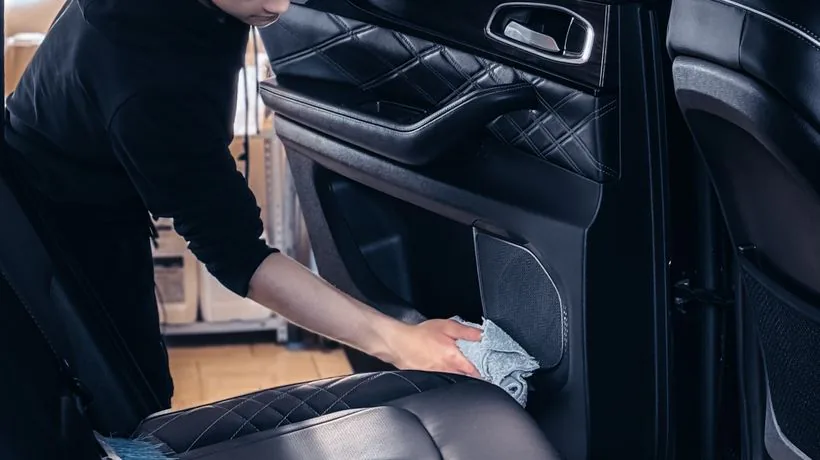
Spray the cleaner onto a folded microfibre cloth, never straight onto the dashboard. Overspray drifts onto the windscreen and into switchgear, and Which? warns that too much water from a cleaning spray could affect electronic components. Follow with a dry cloth so no film is left to collect dust.
- Vents and buttons: work a soft brush into the slats and around each switch, with the vacuum nozzle close by.
- Screens and instruments: wipe with a dry, soft cloth first and only dampen it with water if marks remain. Nissan's manual says the meter and gauge lens should be cleaned with a cloth dampened only with water, never glass or plastic cleaner.
- Touch points: the RAC lists the spots you touch most, including the steering wheel, gear lever, door handles and seatbelt buckles. They gather skin oil, so give them a second wipe.
- Shine sprays: Which? notes that cockpit shine products are often greasy and should not go on steering wheels or near the pedals.
For glare and matt trim, see our guide to cleaning a dashboard without a greasy shine.
How do you clean the seats, carpet and boot?
Fabric is where home cleans usually go wrong, because seat foam and carpet underlay hold water for a long time. The RAC advises working interior shampoo in with a soft brush, and warns that a cabin left too wet will smell.
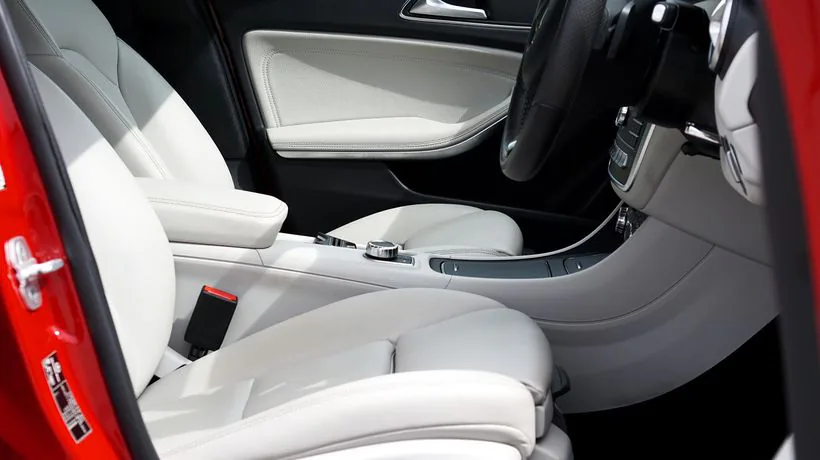
- Cloth seats: mist an upholstery cleaner across a whole panel, agitate gently and lift it back out with a wet and dry vacuum or clean towels. Our guide to cleaning car upholstery at home covers each stage.
- Leather and vinyl: vacuum the seams first so grit is not dragged across the surface, and use a leather cleaner on real leather. Nissan suggests a soft cloth dampened in a mild soap solution for vinyl and synthetic leather.
- Airbag sensors: Nissan's Leaf manual warns against using water or acidic cleaners, including hot steam cleaners, on the seat, because this can damage the seat or the occupant classification sensor and affect the airbag system. Check your own handbook before wetting a seat, and mention any warning when you book a professional clean.
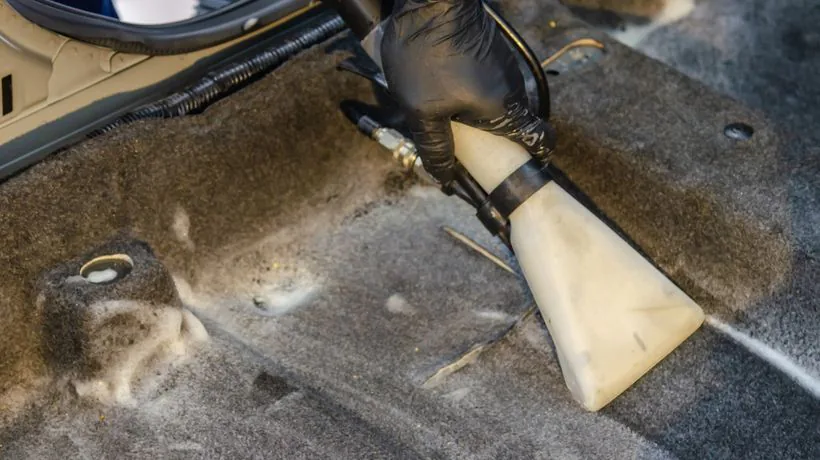
- Carpet and boot: loosen grit with a stiff brush before vacuuming, and lift the boot floor panel to reach the well beneath it. Our guide to cleaning car carpets and floor mats covers shampooing and safe refitting.
How long does it take, and does the weather matter?
Allow more time than you expect. Our interior steam clean typically takes 2 to 3 hours with professional equipment, so a first thorough clean with household tools is rarely quick.
In hot sun, stay in the shade so product doesn't dry and streak. In cold or damp weather, brushing, vacuuming and wiping are fine, but save shampooing for a dry spell, because fabric dries slowly and the windows mist up. Which? suggests keeping the doors and boot open while you work, so dust escapes rather than being breathed in. Never lock the car up overnight with damp carpet.
How do you keep a car interior clean between deep cleans?
- Keep a bin bag in a door pocket and empty it each time you fill up or charge. Which? points out that rubbish and empty drinks containers invite smells and damp.
- Shake the mats out and vacuum the footwells every week or two.
- In the wettest months, fit rubber mats in place of the carpet ones, never on top.
- Take wet coats, gym kit and dog towels indoors each evening.
If the cabin smells musty however often you clean it, water is probably getting in, and car mould removal begins by tracing the moisture. Mould can aggravate allergies and asthma; see a GP if anyone has symptoms.
When is it worth paying for a professional interior clean?
Home cleaning handles dust, crumbs and light marks. Set-in stains, soaked-in spills and smells are harder, because household kit can't pull enough dirt and moisture back out of foam and underlay. Pet hair woven into carpet is slow work too.
Our car interior cleaning comes in two forms. The full interior and exterior valet, from £80, vacuums the cabin and boot, lifts and cleans the mats, wipes the dashboard, door cards, console and vents, and cleans the glass inside and out. The interior steam clean, from £60, goes deeper: seats are steamed, carpets and mats are steamed and extracted, and vents, cup holders and seat rails are reached, with odour treatment where needed. We bring our own water and power, and there is no call-out fee.
Sources
- RAC: How to clean your car interior
- Which?: 7 tips for cleaning the inside of your car (and what not to do)
- Nissan: Leaf Owner's Manual, Cleaning interior
Want the whole interior cleaned for you?
EMobile Valeting brings professional, fully insured mobile valeting to your door across Derby, Nottingham and the East Midlands. No call-out fee.
See Interior Cleaning Get a Free Quote