To clean leather car seats safely, vacuum the seams, then work a mild leather cleaner over each panel with a soft brush or microfibre cloth, wipe away the residue with a barely damp cloth and dry the surface. Gentle and often beats strong and rarely. Nearly all modern car leather has a protective coating on top, and what you are really cleaning is that coating. Harsh products and hard scrubbing wear it through, and once it is gone the leather beneath starts to crack and stain. This guide covers the routine, the products to avoid and how to look after pale seats.
What kind of leather is in your car?
Most cars use pigmented, coated leather: hide with a coloured finish and a clear protective layer. It is hard wearing and resists spills for a while, which is why water beads on it. A few premium models use more natural, lightly finished leather that darkens when wet and needs extra care. Many seats are also part leather and part synthetic, with real hide on the seating surfaces and vinyl on the sides and back.
Your owner's handbook will say what you have and how the manufacturer wants it cleaned. That advice is worth following because it reflects the finish actually used in your seats.
What should you use, and what should you avoid?
Good choices are a dedicated pH balanced leather cleaner, a soft horsehair or synthetic detailing brush, and a stack of clean microfibre cloths. Nissan's Leaf owner's manual recommends a soft, lint free cloth dampened with lukewarm water and mild soap for genuine leather, with a gentle circular motion and no soaking.
The same manual says never to use alcohol, cleaning solvents, oils, varnishes or polishes on the leather, and advises against unknown products because they can damage the finish. It also says steaming or ironing is not recommended. Common household culprits include:
- Baby wipes and antibacterial wipes, which often contain alcohol or surfactants that dry the coating.
- All purpose kitchen sprays and washing-up liquid in strong dilutions.
- Furniture polish and silicone sprays, which leave a slippery, shiny film.
- Magic eraser sponges, which are a fine abrasive and remove the colour coat.
How do you clean leather seats step by step?
- Vacuum. Use a soft brush attachment along every seam and perforation. Grit trapped in creases acts like sandpaper each time someone sits down. Mazda's owner's manual specifically advises removing dust and sand with a vacuum cleaner.
- Test. Try the cleaner on a hidden area, such as the lower side of the seat base.
- Apply to the brush, not the seat. Spray the cleaner onto the brush or cloth so perforated panels don't flood.
- Work small sections. Brush gently in overlapping circles until a light foam lifts the dirt from the grain.
- Wipe off. Take the residue away with a clean, damp microfibre, then dry with another.
- Check the cloth. If it still picks up grey, repeat on that panel rather than pressing harder.
Mazda's manual also says that if leather upholstery gets wet, you should remove the moisture promptly with a dry cloth, because moisture left on the surface can cause hardening and shrinkage. The same applies after cleaning: never leave a panel damp.
Do leather car seats need conditioning?
Coated leather doesn't absorb much, so heavy conditioners mainly sit on the surface and can leave seats greasy. A light, water based protection product made for automotive leather is more useful: it adds a slight barrier against dye transfer and makes the next clean easier. Use it two or three times a year, or after a deep clean, and buff off any excess so the seat feels dry, not slippery.
Sun and heat matter more than conditioning. Mazda warns that long periods of direct sunlight can cause deterioration and shrinkage. A windscreen sunshade in summer and parking out of direct sun where you can will do more for your seats than any bottle. In winter, damp coats and road salt carried in on clothing are the bigger issue, so wipe the seats more often.
How do you keep white or cream leather looking clean?
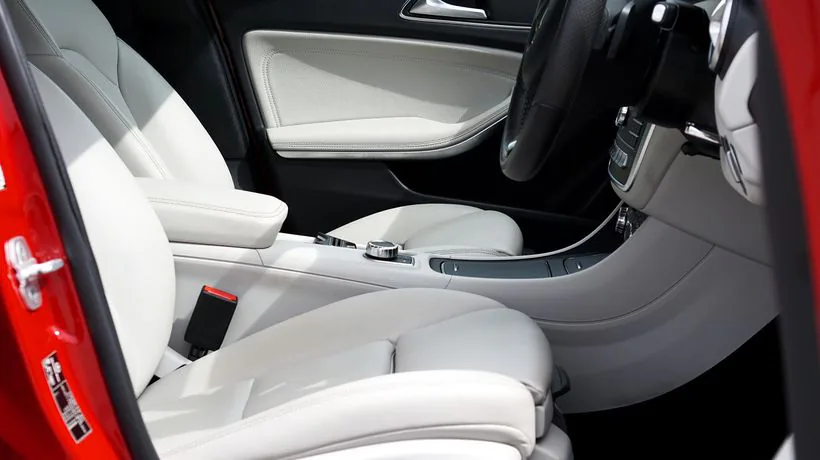
Pale seats show everything, especially blue tinting on the driver's outer bolster from jeans. Dye transfer is easiest to remove when it is fresh, so give light seats a quick wipe with leather cleaner every couple of weeks. Leaving it for months lets dye sit in the coating and it becomes very hard to lift without risking the colour.
Mazda lists grease or oil such as hand cream, and alcohol found in cosmetics and hair products, among the substances to clean off leather immediately. Our guides on removing sun cream marks and getting pen ink off seats deal with two of the most common marks on pale leather.
When should you leave leather to a professional?
Call in help if the coating is cracked, worn through to bare hide on the bolsters, or the colour has rubbed off. Cleaning can't restore missing finish, and scrubbing those areas makes them worse. Heavy staining, old ink and deep dye transfer also need careful, graded treatment.
Leather cleaning and protection is part of our full interior and exterior valet, from £80. We clean each panel by hand with leather specific products and finish with a protection product suited to the seat. We cover Derby and the surrounding area, working on your drive with our own water and power.
Sources
- Mazda: MX-5 Owner's Manual, Leather Upholstery Maintenance
- Nissan: Leaf Owner's Manual, Genuine leather seat covers
Want your leather professionally restored?
EMobile Valeting brings professional, fully insured mobile valeting to your door across Derby, Nottingham and the East Midlands. No call-out fee.
See Car Valeting Get a Free Quote