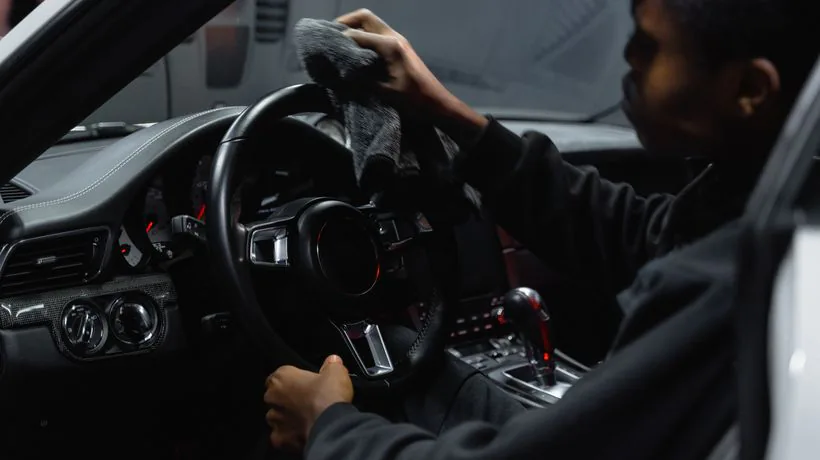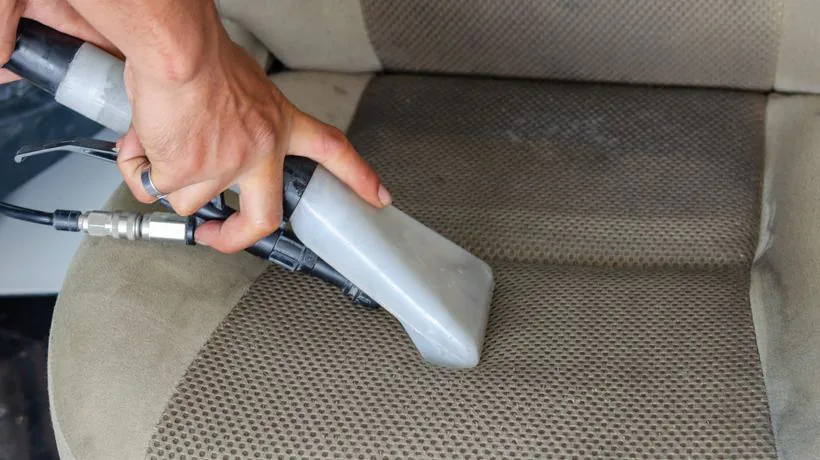
To remove a coffee stain from a car seat, blot up as much as you can immediately, then sponge the mark with a teaspoon of mild detergent in a cup of lukewarm water, rinse with a weak white vinegar solution and blot dry. If the coffee had milk or sugar in it, pre-treat with an upholstery cleaner first to break down the fat and stickiness. Speed matters most. Fresh coffee is mostly water and lifts easily, but as it dries the brown tannins bond to the fibres and leave a ring that is far harder to shift.
What should you do in the first five minutes after a spill?
Pull over somewhere safe before dealing with it. The Highway Code (rule 148) lists having a meal or drink among the distractions to avoid while driving, and a hot spill in your lap is exactly why. Once stopped:
- Blot with anything absorbent: kitchen roll, napkins, a spare T-shirt. Press firmly and keep changing to a dry section.
- Don't rub. Rubbing spreads the coffee outwards and drives it deeper into the foam.
- Dilute lightly. If you have bottled water, dab a little onto the mark and blot again. This stops the coffee concentrating as it dries.
- Leave a door or window open when you park so the seat starts drying.
Those few minutes often decide whether the stain disappears or leaves a mark.
How do you remove a dried coffee stain from fabric seats?
The University of Georgia Extension's coffee and tea guidance, written for carpets, uses a sequence that also works well on car seat fabric:
- Blot away any moisture with a clean white cloth.
- Apply a detergent solution. Mix about 1 teaspoon of neutral detergent into 1 cup of lukewarm water. Work it into the stain gently with a cloth or soft brush, then blot.
- Rinse and blot with clean water.
- Use a vinegar rinse if a brown mark remains: about one part white vinegar to two parts water. Dab it on, then rinse with clean water and blot again.
- Dry under weight. Lay a folded dry towel over the area with something heavy on top for a few hours to draw out the last moisture.
Always test on a hidden area first; the same guidance recommends pre-testing every cleaning agent for colourfastness. Clean right out to the edge of the stain and slightly beyond, so you don't leave a fresh water line. If one does appear, our guide to removing water stains from upholstery explains how to feather it out.
Why are lattes and sweet coffees harder to remove?
Milk adds fat and protein, and sugar dries to a tacky film that holds dirt. Together they turn a simple tannin stain into a combination stain. The UGA guidance adds a step for coffee with cream or sugar: gently remove any residue, then sponge the area with a commercial carpet or upholstery cleaner before carrying on with the detergent and vinegar method.
Avoid hot water on milky spills. Heat can set protein, which is the opposite of what you want. Lukewarm water is the safest choice for every type of coffee. Milky spills left in a warm car can also go sour, so clean them the same day, especially in summer.
How do you get coffee off leather seats?
Coated leather resists coffee for a short time, so quick action usually means no stain at all. Wipe the spill up with a soft cloth, then clean the area with a dedicated leather cleaner and dry it fully. Mazda's owner's manual notes that if leather upholstery gets wet, moisture should be removed promptly with a dry cloth, because moisture left on the surface can cause hardening and shrinkage.
Don't use vinegar on leather, and pay attention to perforated panels: coffee can run into the holes and the foam behind them. Blot those areas rather than wiping across them.
What should you avoid when treating coffee stains?
- Bleach or oxygen stain removers made for laundry. They can strip dye from seat fabric, leaving a pale patch that is worse than the stain.
- Soaking the seat. Water that reaches the foam brings old dirt up and creates a ring.
- Hairdryers on high heat. Fast heat can set any residue and may scorch some synthetic fabrics.
- Leaving cleaner in the fabric. Residue attracts dirt, so the patch you cleaned turns grey again within weeks.
When is it time to call a valeter?
Old coffee stains, spills that soaked deep into the cushion, and seats with several layered marks are better treated with hot water extraction, which rinses the fabric and recovers the moisture in one pass. If the whole seat is grubby, cleaning only the coffee mark will leave a clean patch, so treating every panel gives a more even result. Our guide to cleaning car upholstery at home covers the full seat method.
Stain treatment and fabric extraction are included in our full interior and exterior valet from £80. If a spill has left a sour milk smell, interior steam cleaning from £60 is often the better fit. No call-out fee applies, and we work Monday to Saturday.
Sources
- University of Georgia Extension: Remove Stains From Coffee, Tea
- GOV.UK: The Highway Code, general rules for all drivers and riders (103 to 158)
- Mazda: MX-5 Owner's Manual, Leather Upholstery Maintenance
Stubborn stain that won't budge?
EMobile Valeting brings professional, fully insured mobile valeting to your door across Derby, Nottingham and the East Midlands. No call-out fee.
See Steam Cleaning Get a Free Quote