Sticky residue comes off car interiors with warm soapy water for spills and a gentle adhesive remover for tape and sticker marks. Sticky surfaces build up from drink spills, melted sweets, old stickers, parking permits and phone mount pads, and they collect dust until the area looks grubby. The right cleaner depends on the cause, so identify it first. The golden rule is to test anything stronger than soapy water on a hidden area before using it on visible trim, and to apply products to a cloth rather than spraying them onto the car.
What is causing the stickiness?
There are three common causes, and each needs a different approach:
- Spills: fizzy drinks, juice, coffee with sugar and melted sweets. The sugar is water soluble and lifts with mild cleaning.
- Adhesive residue: glue left by stickers, tape, badges, parking permits, dash cam and phone mount pads. Adhesive is designed to grip and resist water, so it needs an adhesive remover.
- Degrading trim: some soft-touch plastics become tacky as their coating breaks down with heat, sunlight and age. This is not dirt, and it will not simply wash off.
Press a clean finger on the area. Sugary residue feels tacky and may smell sweet; adhesive is gummy and stringy; a failing coating feels sticky across a whole panel, not just in one spot.
How do you clean sticky spills off car trim?
For sugary drink and food residue, warm soapy water does most of the work.
- Add a few drops of washing-up liquid or a mild interior cleaner to a bowl of warm water.
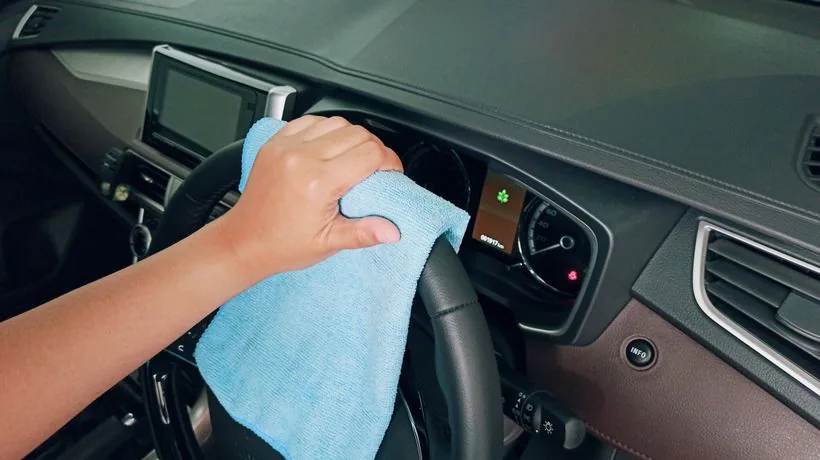
- Dampen a microfibre cloth and wring it out well. Electronics and switches don't like drips.
- Lay the cloth on stubborn patches for a minute to soften the dried sugar.
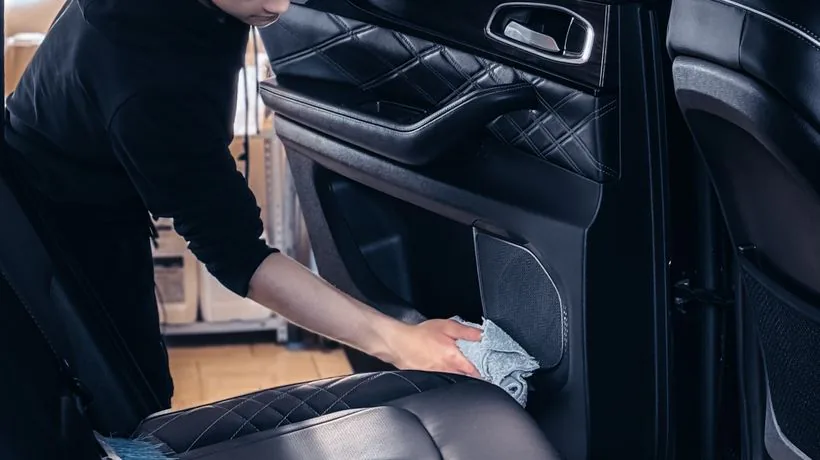
- Wipe in one direction, and use a soft detailing brush for textured plastic, switch surrounds and cup holders.
- Wipe again with a cloth dampened in clean water, then dry with a fresh cloth.
This handles the majority of everyday stickiness without anything harsh. Cup holders often have removable rubber inserts that can be washed separately in the sink.
How do you remove sticker, tape and mount pad residue?
For glue left by stickers, tape or dashboard mounts, a dedicated adhesive remover or a little isopropyl alcohol on a cloth works well on hard plastics.
- Remove the bulk first. Peel slowly at a low angle. Gentle warmth from a hairdryer on a low setting softens old sticker glue on hard plastic and glass.
- Scrape carefully. The University of Georgia Extension's advice on adhesive and tape residue starts by gently scraping off the gummy matter with a dull tool. In a car, use a plastic card or plastic razor blade, never metal.
- Apply remover to the cloth, not the surface. Hold it on the residue for a few seconds, then rub gently.
- Clean off the remover. Follow with warm soapy water so no oily film is left, then dry.
Some removers can dull or mark certain plastics, so always test on a hidden area first. On the alcohol question, Nissan's X-Trail owner's manual says that if it is unavoidable to clean or sterilise interior surfaces, ethanol below 75% should be used, and that it must be wiped off completely because it is flammable. That is a sensible upper limit for any alcohol you put on trim.
What should you never use on sticky car trim?
- Acetone or nail polish remover. It can melt or dull many interior plastics and leave a permanent cloudy patch.
- Thinners, petrol and white spirit. Nissan's manual says never to use benzine, thinner or any similar material on the interior.
- Strong solvents on soft-touch coatings. They can strip the coating and turn a small sticky spot into a large damaged one.
- Metal blades and scouring pads, which scratch plastic and glass coatings.
- Any solvent on screens and instrument lenses. The same manual says to clean meter and gauge lenses only with a soft cloth dampened with water.
For infotainment displays, our guide to cleaning a car touchscreen safely explains what is safe on anti-glare coatings.
What can you do about sticky, degrading plastic trim?
Some older or sun-damaged soft-touch plastics, often on door handles, window switches and console lids, become permanently tacky as the coating breaks down. Cleaning won't reverse this. Mild cases can be improved by carefully removing the failing coating with isopropyl alcohol, leaving the harder plastic beneath, but the finish will change and the result is not always even. Badly degraded parts may be better replaced.
Heat and sunlight speed up the process, so a sunshade and parking out of direct sun help protect trim that is still in good condition. Our guide to cleaning and protecting plastic trim covers the right products for healthy surfaces. If you are unsure whether a panel is degrading or just dirty, it is best to have it looked at rather than scrubbing aggressively.
When should you get the interior professionally cleaned?
If the whole interior feels grubby and sticky, a full clean resets every surface at once. A valeter works through each panel with interior cleaners, soft brushes and steam where suitable, removes adhesive residue with appropriate products, and finishes with a non-greasy protectant.
Our full interior and exterior valet from £80 cleans and refreshes trim, console and surfaces throughout the car. We work across Derby and the East Midlands, at your home or workplace, Monday to Saturday.
Sources
- University of Georgia Extension: Remove Stains From Glue (Airplane, Super, Adhesive/Cellulose Tape)
- Nissan: X-Trail Owner's Manual, Cleaning interior
Grubby, sticky interior?
EMobile Valeting brings professional, fully insured mobile valeting to your door across Derby, Nottingham and the East Midlands. No call-out fee.
See Car Valeting Get a Free Quote