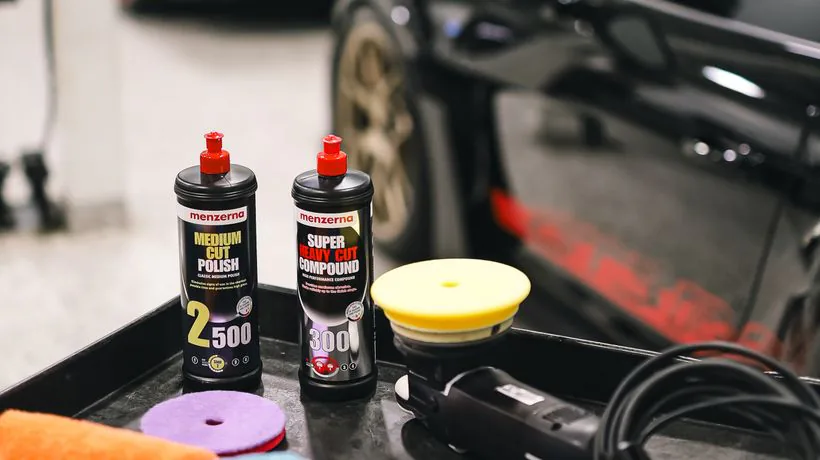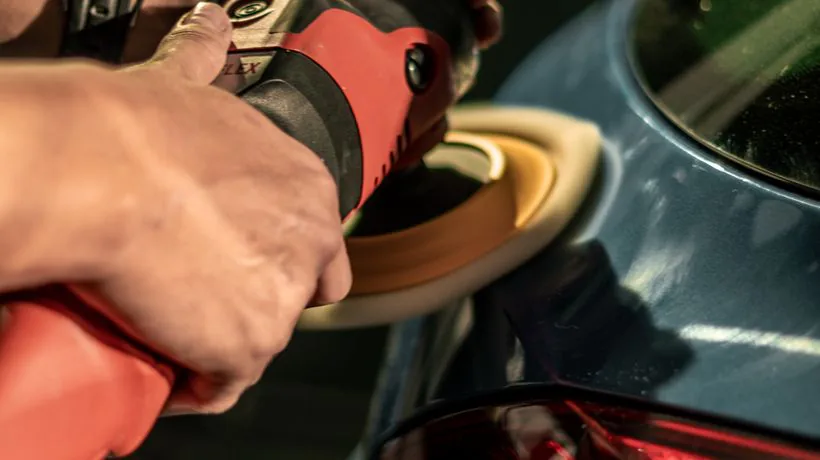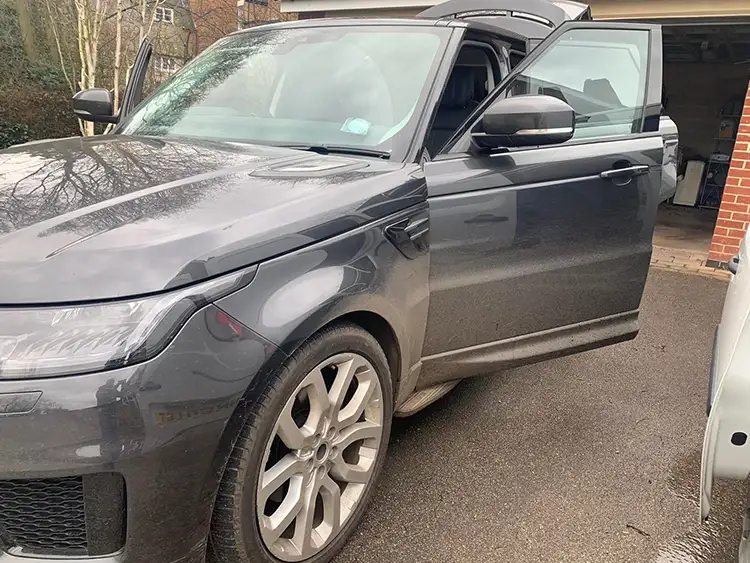
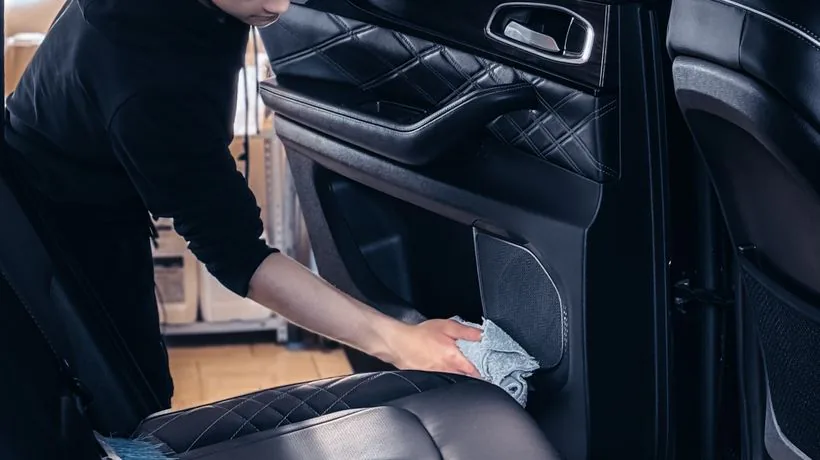
A full car valet is a complete clean of the interior and exterior. Inside, that means a deep vacuum of carpets, seats and boot, with mats lifted and cleaned, and every hard surface wiped, including the dashboard, door cards, centre console and air vents. Outside, it means a hand wash, rinse and dry, wheels, tyres and arches, door shuts and sills, glass inside and out, and a protective wax on the paint. Below is the full checklist in the order we work, followed by what a full valet does not cover so you know what to ask for.
Interior checklist: what gets cleaned inside?
- Clear out. Loose rubbish is removed and anything personal left in the car is set aside safely. It helps if you have emptied it first; see how to prepare before the valeter arrives.
- Mats out. Floor mats are lifted, cleaned and left to dry before refitting.
- Dry dusting. Vents, switch gear, seams and the gaps around the gear selector are brushed so dust is loosened before vacuuming.
- Deep vacuum. Carpets, under and between the seats, seat rails, pockets and the full boot area, including around the spare wheel well cover.
- Hard surfaces. Dashboard, steering wheel, centre console, cup holders, door cards and pockets wiped with products suited to plastic, vinyl and leather.
- Interior glass. Windscreen, side windows, rear screen and mirrors cleaned to a streak-free finish.
Exterior checklist: what gets cleaned outside?
- Wheels and arches first. Alloys are cleaned with a dedicated wheel cleaner to remove brake dust, and arches are rinsed, using separate tools so wheel grime never reaches the paint.
- Pre-rinse. Loose grit is rinsed off before anything touches the paint.
- Two-bucket hand wash. Panels are washed from the top down with a paint-safe mitt and car shampoo, rinsing the mitt in clean water between sections.
- Rinse and dry. Each panel is rinsed and dried with clean microfibre towels.
- Door shuts and sills. The frames and sills inside each door and the boot opening are wiped.
- Exterior glass and lights. Cleaned to a clear finish.
- Tyre dressing. Applied for a clean, dark finish.
- Wax. A carnauba wax is applied to the paint for gloss and water beading.
The AA's own washing advice follows the same logic: work from the top down so dirt does not run onto clean areas, use a separate cloth for wheels, clean door and boot gaps, and dry promptly with microfibre because air drying leaves streaks and watermarks.
Why does the order of the work matter?
Doing the interior first means dust and debris from vacuuming and mat cleaning fall on dirty paint, not clean paint. Cleaning wheels before the bodywork stops brake dust being splashed onto panels that have already been washed. Glass is done near the end so it is not smeared by later work. These small details are a lot of the difference between a quick wash and a proper valet.
Why are glass, lights and number plates part of the valet?
They are a matter of safety as well as appearance. Annex 6 of the Highway Code says windscreens and windows must be kept clean and free from obstructions to vision, and that lights, indicators, reflectors and number plates must be kept clean and clear. The inside of a windscreen builds up a film that causes glare from low sun and oncoming headlights, which a quick wipe usually spreads around rather than removes. In a full valet every pane is cleaned inside and out, along with the mirrors.
What is not included in a standard full valet?
- Deep stain removal and fabric extraction. Light marks are cleaned, but set-in stains need more. Steam cleaning from £60 is the usual next step.
- Mould and damp. Visible growth or a musty smell needs mould removal from £80.
- Engine bay. A separate clean from £40.
- Paint correction. Swirls and light scratches need premium detailing from £150.
- Convertible roofs. Fabric and vinyl hoods are cleaned and treated separately from £50.
- Heavy pet hair. Included, but a very heavy coat may add time and cost; tell us when you book.
How long does it take and what does it cost?
A full valet takes around 1.5 to 2.5 hours, depending on the size of the car and how dirty it is, and starts from £80. We bring our own water and power and there is no call-out fee. At the end we walk round the car with you or whoever has the keys. If you are not sure whether you need this level of clean or something lighter, read full valet vs mini valet, or see our car valeting service page to book.
Sources
- GOV.UK: The Highway Code, Annex 6: vehicle maintenance, safety and security
- The AA: How to wash your car
Ready to book a full valet?
EMobile Valeting brings professional, fully insured mobile valeting to your door across Derby, Nottingham and the East Midlands. No call-out fee.
See Car Valeting Get a Free Quote