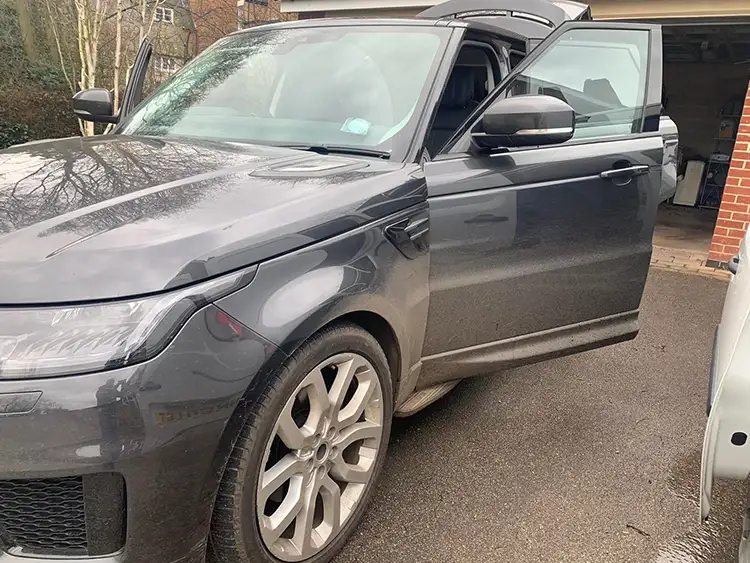
Paint correction is the careful machine polishing of a car's clear coat to remove defects such as swirl marks, holograms, haze, water spot etching and light scratches. Rather than filling or hiding them, it levels the lacquer so the marks are gone and light reflects evenly again. Your car probably needs it if the paint looks cloudy or covered in fine circular scratches when the sun hits it, even straight after a wash. If it only looks dull when dirty, a good valet and fresh wax may be all it needs.
How does paint correction actually work?
Car paint is built in layers. The RAC describes three on top of the metal: primer, base coat (the colour) and clear coat. Most everyday marks sit only in the clear coat, a thin transparent layer.
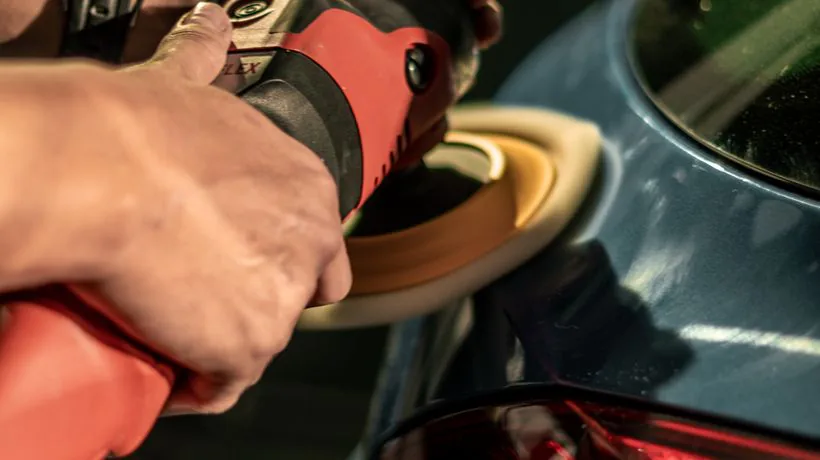
A swirl mark is a tiny valley in that layer. Light catches its edges and scatters, which is why swirls look like spider webs around a light source. Paint correction uses a machine polisher, an abrasive compound and a pad to cut the surrounding lacquer down to the depth of the valley, so the surface becomes flat and the defect disappears. A finer polish then refines the surface to full gloss.
Because it removes material, it has to be measured and controlled. Clear coat does not grow back.
What happens during a paint correction?
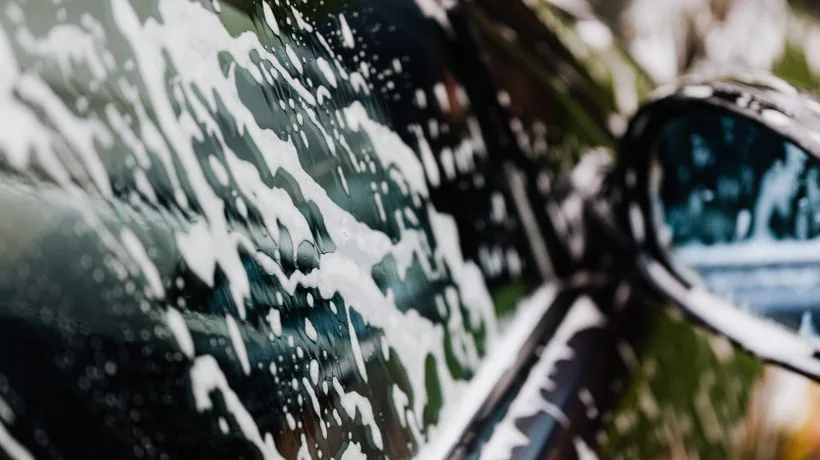
- Thorough wash to remove all loose dirt.
- Decontamination with iron remover, tar remover and a clay bar, so no bonded particles are dragged under the pad. Our guide to clay bar treatment explains that stage.
- Inspection under strong light to map the defects, and masking of rubber, plastic trim and badges.
- Test section to find the least aggressive pad and compound combination that removes the marks.
- Compounding panel by panel where defects are heavier.
- Refining with a finishing polish to remove any haze left by the cutting stage.
- Panel wipe to remove polishing oils, so you see the true finish rather than a filled one.
- Protection with a wax or sealant to keep the corrected surface looking its best.
A one step enhancement uses a single polish for a big gloss improvement. A multi step correction goes further on heavily marked paint and takes considerably longer.
What can paint correction fix, and what can't it?
It can usually remove or greatly reduce:
- Wash induced swirls and holograms from earlier poor machine polishing.
- Light scratches you cannot catch with a fingernail.
- Oxidation and fading on older single stage paint.
- Etching from bird droppings and water spots, if caught before it goes deep.
It cannot fix:
The AA draws the same line, treating swirls on the top coat as something scratch remover can deal with, and deep scratches showing bare metal as a job that may need professional attention.
- Scratches through to the colour coat or primer. The RAC suggests that if a scratch has reached primer or bare metal, professional paint repair may be the best option.
- Stone chips, which are missing paint and need touch-up.
- Failing or peeling lacquer, which needs a respray.
Sometimes the safe answer is to improve a deep mark rather than chase it to zero, leaving enough clear coat to protect the paint.
Can it damage paint if done badly?
Yes, which is why technique matters more than the machine. Nissan's owner's manual warns that machine compounding or aggressive polishing on a base coat and clear coat finish may dull the finish or leave swirl marks. Common problems from poor work include:
- Burn through on edges and body lines, where paint is thinnest.
- Holograms from a rotary polisher used with too much speed or the wrong pad.
- Defects filled with glazes that reappear after a few washes.
A careful detailer works with the lightest effective combination, keeps the pad moving and checks progress under different light sources.
Does your car need paint correction?
Check it on a sunny day or under a torch after washing. Signs include:
- Circular swirls visible around reflections of the sun.
- A grey or milky haze on darker colours.
- Dull patches that do not improve with wax.
- Faint outlines where bird droppings once sat.
It suits cars that you plan to keep and enjoy, cars being prepared for sale, and dark colours that show every mark. It is not a routine treatment. Once corrected, careful washing keeps the finish right for a long time, and the job should not need repeating every year. If you want to try the lighter, hand based approaches first, our guide to removing scratches and swirl marks is the place to start.
How do we approach it on a mobile visit?
Paint correction is part of our premium detailing, which starts from £150 and covers correction and protection. We bring our own water and power, inspect the paint with you before starting, and agree what is realistic for the marks on your car. The finish is protected with a wax or sealant. You can find our standard washes and valets on the car valeting service page.
Sources
- RAC Drive: How to remove car scratches
- Nissan UK: Qashqai owner's manual, Waxing
- AA: Dealing with minor dents and scratches
Paint looking swirled or dull?
EMobile Valeting brings professional, fully insured mobile valeting to your door across Derby, Nottingham and the East Midlands. No call-out fee.
Explore Detailing Get a Free Quote