
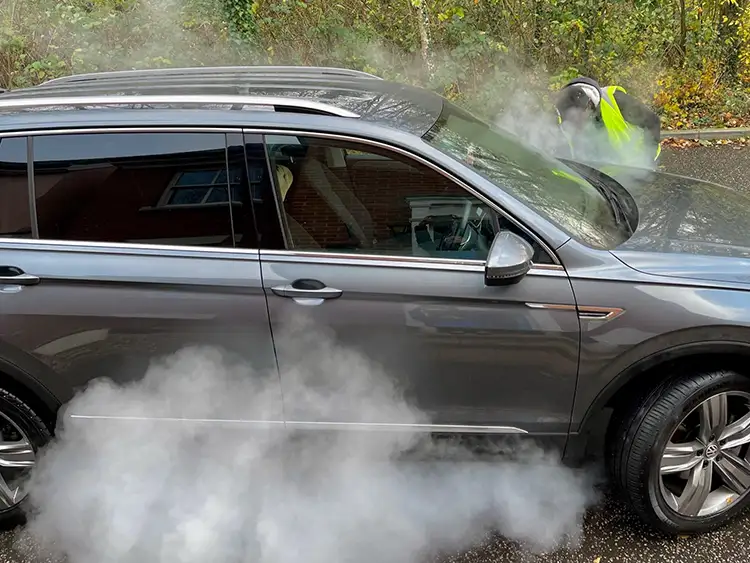
Spilt coffee worked into a seat, a footwell gritty with dried mud, vents furred with dust: those are the jobs where a vacuum and a spray bottle run out of road. Dry steam, at roughly 100 to 120C at the nozzle, gets into fabric, stitching and trim, loosening grime so it can be lifted away. Given enough dwell time, it also greatly reduces bacteria and dust mites in the material, without soaking anything.
We bring the steamer, the water and the power to Loughborough from Chilham, around 24 minutes away, and charge no call-out fee. Because the method uses so little moisture, seats are normally dry in a few hours, so in most cases the car is back in use the same day.
Loughborough's damp winters, flats and why low moisture matters
Across the 6 Census 2021 neighbourhoods (MSOAs) closest to the centre of Loughborough, 18% of homes are flats or other non-house types and 23.3% are terraced. People living there rarely have a drive to work on or a garage to leave a car drying in, so a wet shampoo that takes a day or two to dry out is a real nuisance when the car is needed again the next morning. Steam avoids that. It also suits the 34.7% of households in those Census neighbourhoods with two or more cars, where the second car may well be the family hauler with child seats, pet hair and a boot full of sports kit.
Then there's the air itself. Loughborough sits 45 metres above sea level near the River Soar, and modelled ERA5 data for the surrounding grid cell, an estimate for 2015 to 2024 rather than a reading taken in the town, puts average humidity at 80%, with the winter months damper still. Fabric that's left wet in those months can stay damp for days and start to smell, so the less water we put in, the better. In the same modelled series July is the least humid month, at 73%, and the easiest for drying. If the car is needed first thing the next day, a late morning booking gives the fabric the whole afternoon to dry, even in the damp months.
Loughborough at a glance
| Distance from our base | 16.8 miles by road (11.5 miles as the crow flies), about 24 minutes off-peak, south-east of DE24 5BN |
|---|---|
| Postcode districts | LE11 |
| Humidity (modelled) | 80% average relative humidity |
| Homes | 24% detached, 35% semi-detached, 23% terraced, 18% flats and other |
| Cars per household | 23% of households have no car, 35% have two or more |
Weather rows are modelled 2015 to 2024 averages for the grid cell that covers Loughborough, not readings taken in Loughborough. Census 2021 figures cover the 6 Census 2021 neighbourhoods closest to the centre of Loughborough. Sources: road distance and drive time from OSRM routing on OpenStreetMap data; postcode and council data from postcodes.io; weather from the ERA5 reanalysis via Open-Meteo; ONS Census 2021 tables TS044 accommodation type and TS045 car or van availability via Nomis.
Steam cleaning across Loughborough and LE11
We steam clean across LE11: Shelthorpe, Thorpe Acre, Nanpantan, Woodthorpe, Dishley, Southfields and Storer, plus Quorn, Mountsorrel and Hathern just outside town. Steam work keeps the doors open for a while, so we need a legal, safe spot with room on both sides of the car, or at least on the pavement side if you're on a narrow terraced street. Flats with allocated bays or a residents' car park are fine if the space is yours to use. If the car spends weekdays parked near Loughborough railway station while you commute, book a day when it is at home instead, as we need permission to work in any car park. The steamer runs on our own power and water.
Neighbourhoods
Nearby villages
What Your Steam Cleaning Includes
- ✓ Seats and upholstery steam cleaned
- ✓ Carpets and mats steamed and extracted
- ✓ Dashboard, console and door cards steamed
- ✓ Vents, cup holders and seat rails reached
- ✓ Boot floor and parcel shelf cleaned
- ✓ Interior glass finished streak-free
- ✓ Odour treatment where needed
- ✓ Drying time agreed before we leave
Getting a better steam clean in Loughborough
Clear the cabin out properly before we arrive: loose items, rubbish, child seats and anything in the boot. Steam can only treat what it can reach, and time spent moving belongings is time not spent on the fabric. If there's a specific stain or lingering smell, point it out at the start. Tell us too about leather or suede-style trim; leather gets moderate heat only, and headliners are treated carefully because the adhesive can loosen if it gets too hot.
In the damp months, from October to January, leave the car somewhere it can breathe for a few hours afterwards, and run the heater on your next drive. In late spring and summer, when the air is drier, a window left slightly open in a safe spot speeds drying. If the car lives on the street, a steam clean followed by a dry, breezy day is ideal, so check the forecast when picking a date and we'll fit around it where we can.
From Our Google Reviews
"Excellent service. My car was left shining. I will surely use again."
Steam Cleaning in Loughborough: Questions
Yes, provided the car is parked legally and safely and we have room to open the doors. Allocated bays outside flats are usually fine. We carry our own water and power, so there's no need for a socket or a tap, and no hose or cable trailing across a shared path. If the bay is tight, we may ask to move the car slightly.
Steam is good at loosening dried food, milk and grime from child seat fabric and the seat underneath. Covers that come off can be treated separately. We avoid soaking the straps and buckles and work carefully around them. Check the seat maker's guidance on cleaning, and refit the seat yourself once it's dry so you're sure it's secure.
Not when it's done properly. Dry steam uses very little water, and we adjust the heat and dwell time to the material. Cloth seats can take more; leather gets moderate heat and a quick pass, followed by conditioning. Headliners are the most delicate area, since the adhesive can soften, so they're treated lightly or left alone if already sagging.