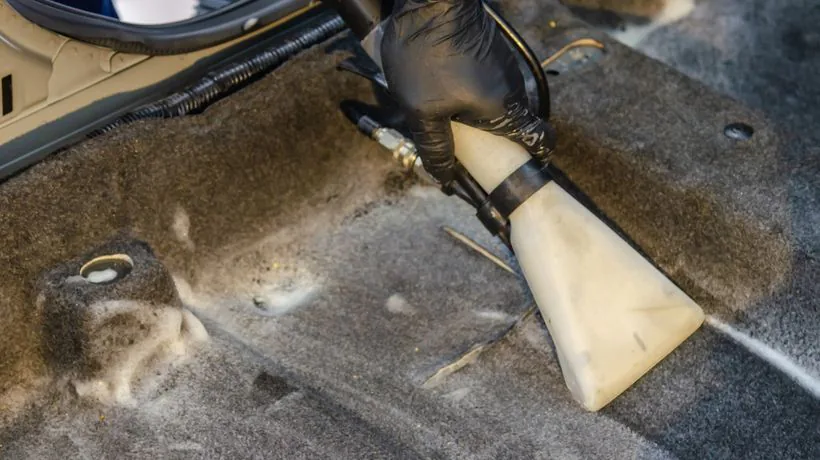
To get sand out of your car, let everything dry completely, take out the mats and beat them outside, then loosen the sand in the carpets with a stiff brush and vacuum slowly in two directions with a crevice tool. The step people skip is agitation. Sand grains are heavy compared with dust, and they drop straight to the base of the carpet pile where suction struggles to reach. Brushing or tapping the carpet lifts them back to the surface, so the vacuum can finally collect them. Expect to repeat the cycle two or three times after a beach day.
Why is sand so hard to vacuum out of a car?
Car carpet is dense, with tight loops sitting on a rubberised backing. Fine sand slips between the loops and settles at the bottom, under the fibres a vacuum nozzle actually touches. Each time someone puts their feet down, it is pushed further in. Damp sand is worse still, because it clumps and clings to the fibres.
It matters for more than looks. Sand is abrasive. Mazda's owner's manual advises removing dust and sand from leather upholstery with a vacuum cleaner and lists sand among the contaminants that can cause premature wear if left. On carpets, trapped grit slowly wears the pile in the footwells, and in seat runners and seatbelt mechanisms it can cause grinding and sticking.
What is the best way to remove sand from car carpets?
- Dry first. If the sand is damp, leave the doors open on a dry day, or wait. Wet sand smears into a paste.
- Remove the mats. Shake them hard, then beat them against a wall or post. Rubber mats can be hosed and dried.
- Agitate the carpet. Scrub briskly with a stiff carpet brush, or firmly pat the carpet with your hand, to bring sand to the surface.
- Vacuum slowly. Use the crevice tool or a narrow nozzle, pulling it slowly towards you, then repeat at right angles.
- Repeat. Agitate and vacuum again until the brush stops bringing up grains.
- Blow out the edges. If you have a compressor or a cordless blower, use short bursts along carpet edges and under seats, then vacuum what it dislodges.
Corded vacuums usually beat small handhelds here because steady suction matters more than convenience.
Where does sand hide in a car?
- Seat runners and the gap under front seats. Slide each seat fully forward and back to reach them.
- The crease between seat back and cushion. Push the crevice tool into it along its full length.
- Door pockets and door bottoms, including the rubber seals at the base of each opening.
- The boot well, under the floor panel and around the spare wheel or repair kit.
- Child seats, especially under the cushion and in the harness buckle area.
- Air vents and the gear surround, where a soft detailing brush helps.
Nissan's Leaf owner's manual recommends occasionally removing loose dust from interior trim, plastic parts and seats with a vacuum or a soft bristled brush, which is the gentle approach for these areas.
How do you get sand off fabric and leather seats?
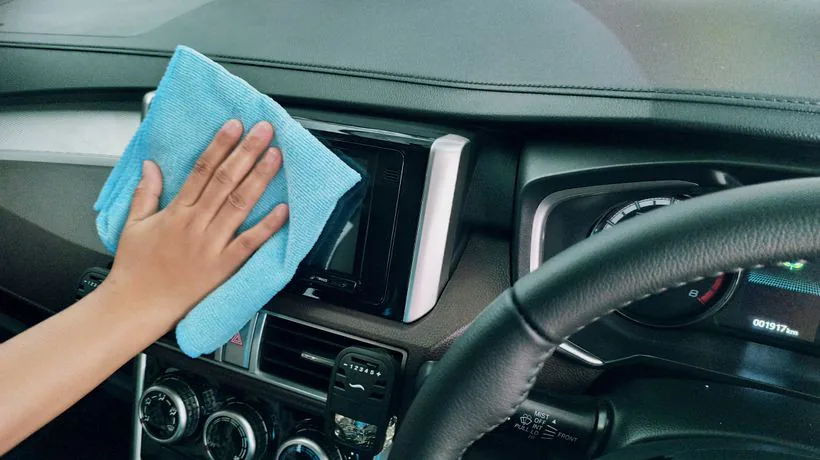
On fabric, brush the seat surface with a soft upholstery brush while vacuuming, so grains are flicked out of the weave as the nozzle passes. On leather, vacuum with a soft brush attachment and pay attention to stitching and perforations, then wipe the seat with a damp microfibre to catch the fine dust. Don't wipe sandy leather with a dry cloth first; that rubs grit across the coating.
Beach days often leave sun cream on the seats as well, and the two combine into a gritty film. Our guide to removing sun cream from car seats picks up from there.
How do you keep sand out of the car in the first place?
- Brush off feet and legs before getting in. A little talc or baby powder helps dry, sandy skin release grains.
- Keep a bag for sandy shoes, towels and toys, and put it in the boot.
- Lay towels or washable covers on the seats for the drive home.
- Fit a rubber boot liner and rubber footwell mats for summer trips.
It isn't only a summer problem. In winter, the grit spread on roads arrives on shoes and does similar damage to carpets, along with salt that leaves white tide marks. Our guide to protecting your car from road salt covers the outside of the car through the colder months.
When does sand need a professional valet?
After a week of beach trips or a camping holiday, sand can be spread right through the carpets, boot and seats. A valeter has stronger vacuums, air tools and stiff brushes to lift it from the base of the pile, and can then clean the carpets and seats underneath, which is the part that tends to get missed at home.
Thorough sand removal is part of the interior work in our full interior and exterior valet from £80. Mention a beach or holiday when you book, as heavy sand adds time. We bring our own water and power, so the car can be done on your drive the day after you get back.
Sources
- Mazda: MX-5 Owner's Manual, Leather Upholstery Maintenance
- Nissan: Leaf Owner's Manual, Cleaning interior
Beach sand taken over your car?
EMobile Valeting brings professional, fully insured mobile valeting to your door across Derby, Nottingham and the East Midlands. No call-out fee.
See Car Valeting Get a Free Quote