To get rid of a milk smell in a car, you have to get the milk itself out of the seat or carpet, including the part that has soaked into the foam or underlay. Blot up as much as you can, flush the area with cold water, clean it with a little mild detergent or an enzyme cleaner, extract the liquid with a wet and dry vacuum or towels, then let it dry completely. Air fresheners only cover it up: while any milk is left in the car, bacteria keep breaking it down and the sour smell returns, worst of all on warm days.
Why does spilt milk smell so bad in a car?
Milk is mostly water carrying proteins, fat and milk sugar. When it soaks into a car seat the water slowly dries, but the solids stay behind in the fibres and foam, and bacteria feed on them. That produces the sour, cheesy smell, and a parked car speeds it up: the cabin warms in the sun and there is little airflow to dry the spill.
Spills also travel. Milk runs through seat fabric into the cushion, down the gap between the seat back and base, and through carpet into the underlay below, where you cannot see it. That is why a patch that looks clean can still smell.
What should you do straight after a milk spill?
- Stop it spreading. Lift out the bottle, the child seat and any mats that caught the spill.
- Blot, don't rub. Press kitchen roll or an old towel into the patch, moving to a dry piece each time; on carpet, stand on a folded towel. University of Georgia Extension's advice for milk on upholstery starts with blotting up all the excess straight away, and Iowa State University Extension warns that rubbing can damage the fabric and spread the stain.
- Use cold water. Iowa State groups milk with protein stains and says never to use hot water first, because it can set the stain. Dampen the area lightly with cold water and blot again.
- Get air moving. Open the doors or windows once you are parked, and avoid leaving the car shut up wet overnight.
How do you clean milk out of fabric seats and carpet?
Test every product on a hidden part of the fabric first, such as the side of the seat base. UGA also warns that overwetting upholstery can leave a ring, so use small amounts and blot as you go.
- Make a mild detergent solution. UGA suggests 1 teaspoon of white washing-up liquid in 1 cup (about 240ml) of warm water for blended and synthetic upholstery, applied a few drops at a time and blotted with a clean cloth. A car upholstery cleaner, or an enzyme cleaner sold for organic stains, is an alternative; follow the label.
- Work it in gently with a soft brush, from the edge of the patch inwards.
- Rinse with a cloth dampened in clear water, so no sticky detergent is left to hold dirt.
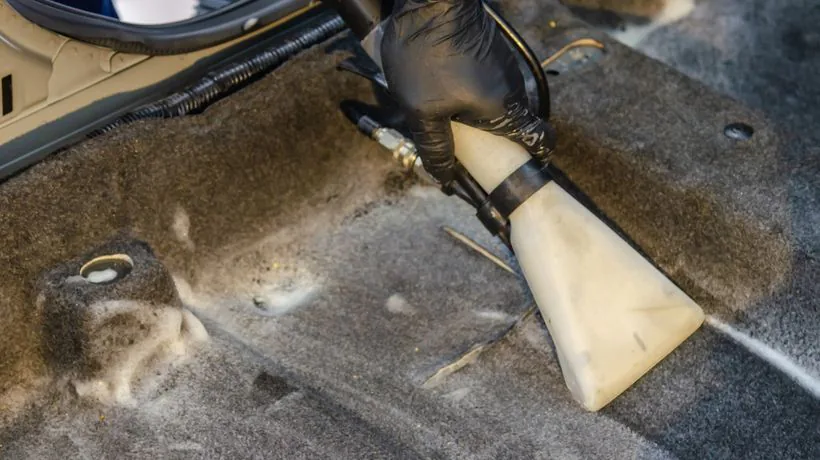
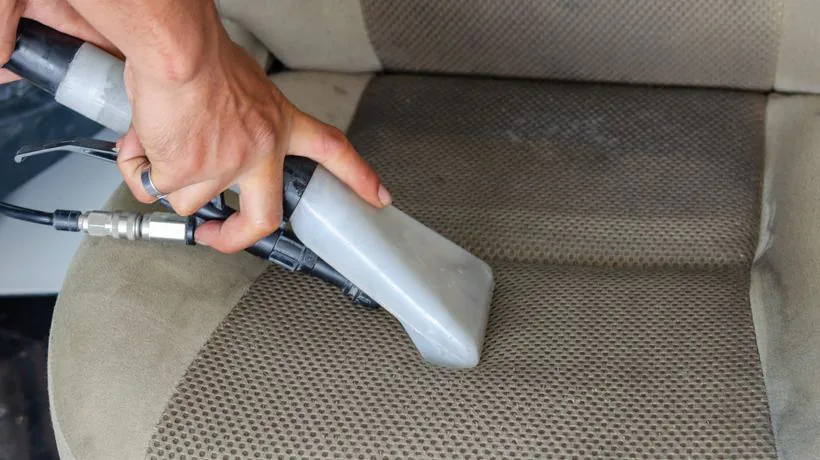
- Extract. A wet and dry vacuum pressed firmly into the fabric pulls far more liquid out of a cushion than towels can; make several slow passes.
- Dry it completely. Leave the doors open on a dry day, or run the heater with the windows slightly open. A seat that stays damp can turn musty.
- Check again later. Sniff the spot a day or two later, once the car has warmed up. Any sour note means residue remains, so rinse and extract again.
For a mark left behind, our guide to removing stains from car seats covers milk alongside drink, grease and ink.
How do you deal with an old milk smell when you can't find the spill?
Sometimes the spill happened weeks ago, or nobody mentioned it. Find the source before cleaning anything.
- Follow your nose. With the car warm and shut for a few minutes, sniff close to each seat, the footwells and the boot.
- Look and feel. Dried milk often leaves a pale tide mark or makes the fabric feel stiff.
- Check the hidden places: seat runners, the crease between seat back and base, under child seats, door pockets and the boot floor.
Once you find it, rehydrate the dried milk with cold water so it can be lifted, then clean and extract as above. Iowa State notes that fresh stains are much easier to remove than ones over 24 hours old, and that some need several treatments, so expect to repeat this on an old spill. Our guide on removing a sick smell from a car uses the same principle of flushing the foam.
What about child seats, leather and hard trim?
- Child seats: check the label or manual before washing anything. Maxi-Cosi, for example, says many of its covers are machine washable, that a cover that cannot be removed can be spot cleaned with a damp sponge or cloth, and that the fixed part of the harness is cleaned with a soft cloth or sponge, warm water and a suitable detergent. It also advises avoiding harsh chemicals, which can cause discolouration.
- Leather: wipe milk off quickly, before it reaches the stitching. UGA's method for milk on leather is to remove the excess, apply only the foam from a solution of mild soap in lukewarm water with a sponge, then wipe with a clean dry cloth. Condition it once dry. On perforated leather, milk can pass through the holes into the cushion.
- Plastics and cup holders: warm soapy water on a microfibre cloth, then a wipe with clean water. Many cup holders have removable rubber inserts you can wash at the sink.
When should you get a milk smell professionally cleaned?
Get help if the smell is still there after two careful attempts, if a whole bottle or carton went over, or if the milk has reached the foam or underlay. Bicarbonate of soda and air fresheners will not reach milk inside a cushion, and our comparison of steam cleaning and ozone for car odours explains why removing the residue matters more than treating the air.
An interior steam clean, from £60, steam cleans the seats and upholstery, steams and extracts the carpets and mats, and includes odour treatment where needed. A full interior typically takes 2 to 3 hours, and fabric seats usually dry within a few hours, depending on the weather. Our car interior cleaning page compares the steam clean with a full valet from £80.
Sources
- Iowa State University Extension and Outreach: Holiday Stains
- University of Georgia Extension: Remove Stains From Oil-Based Foods
- Maxi-Cosi: How to clean and wash your Maxi-Cosi car seat
Milk smell still there after cleaning?
EMobile Valeting brings professional, fully insured mobile valeting to your door across Derby, Nottingham and the East Midlands. No call-out fee.
See Steam Cleaning Get a Free Quote