To remove a sick smell from a car you need to get the vomit out of the fabric and the foam underneath, then break down what is left with an enzyme cleaner. Air fresheners and scented sprays only sit on top. The smell lingers because stomach acid and proteins soak through the seat cover or carpet into the padding below, where they keep releasing odour for weeks, especially when the car warms up. Fast action makes the biggest difference, but even an old spill can usually be cleaned out with extraction.
What should I do in the first ten minutes?
- Pull over safely and open the doors to let air through.
- Put on gloves. If the cause could be a stomach bug, protect yourself; the NHS notes that norovirus spreads by touching contaminated surfaces and then your mouth.
- Lift solids with a plastic scraper, an old card or kitchen roll, working from the outside of the spill inwards so it does not spread.
- Blot, do not rub. Press dry kitchen roll firmly into the area to draw liquid up. Rubbing pushes it deeper.
- Sprinkle bicarbonate of soda over the damp patch if you are not able to clean properly straight away. It absorbs moisture and some odour until you can.
How do I clean it properly at home?
- Vacuum up the bicarbonate once it has dried, using a wet and dry vacuum if you have one.
- Apply an enzyme cleaner made for organic stains, the type sold for pet accidents. Enzymes break down the proteins and acids that cause the smell. Follow the dwell time on the label, usually several minutes.
- Agitate gently with a soft brush, then blot or extract with clean water. Repeat if the stain is still visible.
- Dry it thoroughly. Leave the doors or windows open, ideally on a dry day, or run the heater on fresh air. Damp foam starts to smell musty on top of everything else.
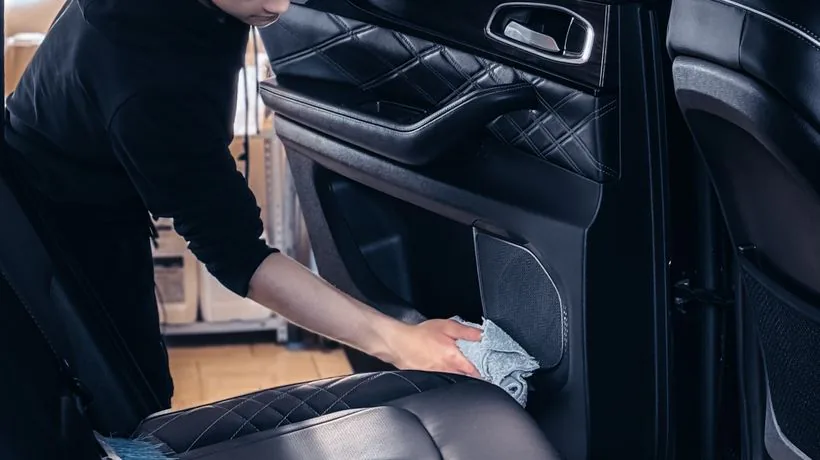
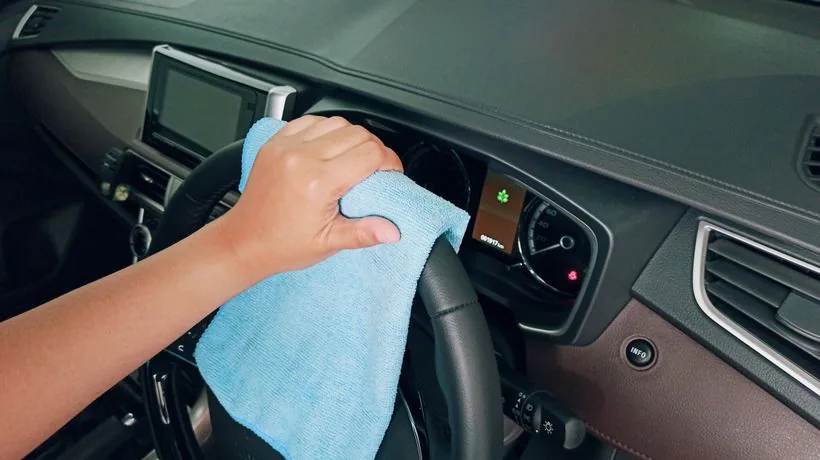
- Clean the hard surfaces around it: door cards, seat belt buckle, seat rails and the back of the front seat, which often catch splashes.
Seat belts need particular care because the webbing is a safety part; our guide to cleaning seat belts safely explains what not to use.
What about child seats and removable covers?
Most child seat covers can be removed and washed, but check the manufacturer's instructions first, since some must be hand washed or air dried. If a stomach bug is involved, the NHS advises washing soiled clothing and bedding separately at 60°C, and the same is sensible for any washable covers the label allows. Do not machine wash harness straps unless the manufacturer says you can; they are normally wiped with mild soapy water. Check underneath the child seat too, as sick often runs behind it onto the car's own seat.
Why does the smell keep coming back?
A smell that fades and then returns on a sunny day is a sign that liquid reached the foam or the carpet underlay. Surface cleaning has dealt with the fabric, but the reservoir below is still there. Heat releases it again. Other common culprits are seat runners and the gap between seat base and backrest, where liquid pools out of sight, and the carpet under a footwell mat. Lift the mats and press a dry cloth into the area; if it comes up damp or smells, that is the source.
At this point extraction is the answer, because the residue has to be flushed out of the foam and pulled back up, not just treated from above.
When should I call a professional?
Call in help if the smell is still there after two careful DIY cleans, if the sick went into a seat seam or between the seat and the console, or if the car is needed for work or a sale. On a steam cleaning appointment we steam the affected fabric to loosen the residue, extract it from the foam, then steam the surrounding trim, seat rails and belts. Steam cleaning starts from £60. If the whole interior needs freshening as well, a full interior and exterior valet starts from £80. We come to you, which helps when the last thing anyone wants is a drive in a car that smells of sick.
How can I stop it happening again?
If the cause is travel sickness, the NHS suggests sitting in the front where possible, getting fresh air by opening a window, looking ahead at a fixed point such as the horizon and avoiding reading or screens. For children, it suggests distraction, such as talking or singing, and breaking up long journeys. Keep a kit in the boot: sick bags, kitchen roll, wipes, gloves, a bin bag and a small tub of bicarbonate of soda. For pets, a washable seat cover or boot liner makes clean-up far easier, and our guide to dog smells in cars covers keeping the boot fresh.
Sources
Need a sick smell gone for good?
EMobile Valeting brings professional, fully insured mobile valeting to your door across Derby, Nottingham and the East Midlands. No call-out fee.
See Steam Cleaning Get a Free Quote