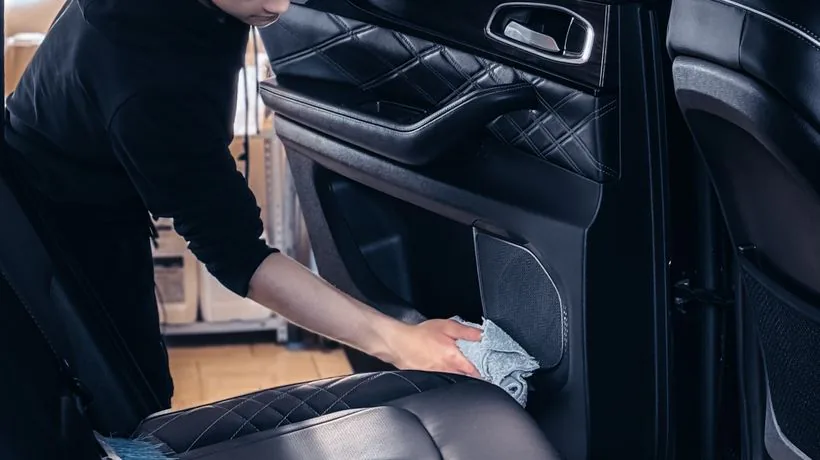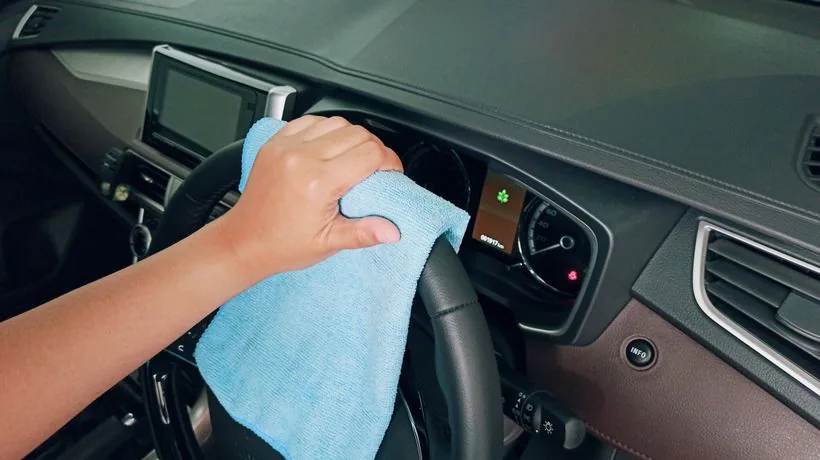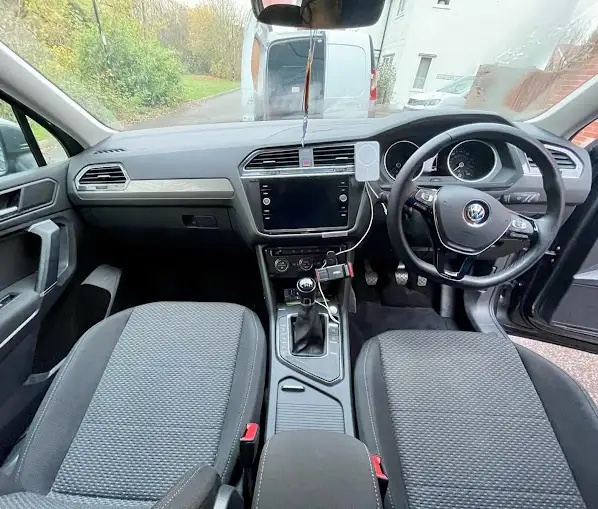
To remove a stain from a car seat, work out what caused it, lift off anything solid, blot rather than rub, test your cleaner on a hidden patch, then use the method that suits that kind of stain. Most drinks respond to lukewarm water and a mild detergent. Milk, blood and sick need cold water, because heat can fix protein into the fibres, and urine starts with a cool rinse too. Grease, sun cream and makeup need a cleaner that breaks down oil, and ink needs a spot cleaner on a cotton bud. Use as little liquid as you can, so the foam under the cover stays dry.
What should you do before treating any stain?
- Remove what is sitting on top. Scrape off solids with a blunt plastic edge and pick out crumbs.
- Blot from the outside in with a folded white cloth. Rubbing frays the pile and drags the mark sideways.
- Read the handbook. Nissan's Leaf handbook warns against water or acidic cleaners, including hot steam cleaners, on the seat, as they can damage the seat or its occupant classification sensor and affect how the airbags work. Check yours before you wet the seats.
- Test on a hidden area, such as the side of the cushion. Dab on a little cleaner, wait a minute and press a white cloth on it. Colour on the cloth means stop.
- Start mild. Mazda's CX-5 handbook says to clean fabric by lightly dabbing it with a soft cloth soaked in mild detergent diluted to about 5% with water, then wiping off the rest with a cloth soaked in clean water and wrung out well.
How can you tell what the stain is?
- Stiff or crunchy once dry: sugar or protein, such as fizzy drinks, juice, milk or sick.
- Darker and slightly shiny, with water beading on it: grease, sun cream or oil from food.
- A brown ring with a paler centre: a water mark, where dirt moved to the edge of a wet patch as it dried.
- A thin line or blot of colour: ink, felt tip or gel pen.
- Small black or green dots with a musty smell: possibly mould, a sign the car is holding moisture.
- A sour or ammonia smell: milk, sick or urine, which may have soaked into the foam.
Treat a stain you can't identify as though it were protein: cold water, mild detergent and no heat.
Which method works for each kind of stain?
- Tea, coffee and fizzy drinks: blot fast, sponge with lukewarm water and a little mild detergent, then rinse with a cloth wrung out in clean water. Coffee with milk or sugar needs an upholstery cleaner first. See getting coffee out of car seats.
- Takeaways and sauces: scrape and blot. Sponge tomato and other coloured sauces with cool water and a mild detergent straight away, as they can stain permanently. Greasy food needs a grease-cutting cleaner before any water rinse. See our guide to food stains in a car.
- Chocolate and ice cream: let chocolate harden, lift it off, then tackle the fat before the sugar, with water no warmer than lukewarm.
- Ballpoint, felt tip and gel pen: dab with a cotton bud and lift, as wiping turns a line into a smear. Ballpoint usually needs a solvent-based spot cleaner; felt tip and gel pen often lift with detergent and water. See removing ink and pen from car seats.
- Makeup and sun cream: both are oily, so water alone spreads them. Wipe fresh marks off straight away, then dab with a grease-cutting cleaner on a cloth.
- Chewing gum: chill it with ice in a bag until brittle, then chip it away with a plastic edge. See chewing gum on car seats.
- Water marks: dampen the whole panel evenly and dry it quickly. Dabbing at the ring alone makes a bigger one.
- Leather and vinyl: Nissan's handbook says to wipe vinyl and synthetic leather with a soft cloth dampened in mild soap solution. Use a leather cleaner on real leather, and keep vinegar and solvents off both.
How do you get milk, blood, sick or urine out of a fabric seat?
These share one rule: keep heat away until the bulk is out. The University of Georgia's stain guidance for blood says stains set by heat are difficult to remove and that cool water should always be used. Milk and sick are protein stains too, so treat them the same way.
- Wear disposable gloves and press up what you can with kitchen roll.
- Sponge with cold water and blot it out, repeating until the cloth comes away clean.
- Apply an enzyme cleaner sold for upholstery or pet accidents, following the label; it is made to break down the residue behind the mark and the smell.
- Dab with a cloth wrung out in clean water, blot dry and leave the doors open.
For urine, the same university's advice for clothing and fabrics starts with a cool water rinse and, if a stain remains after washing, sponging with white vinegar. On a seat, dilute the vinegar, test it out of sight and rinse it out. A smell that returns on warm days means liquid has probably reached the foam.
What should you never put on a stained car seat?
- Bleach or chlorine-based sprays. They can strip colour, and Nissan's handbook says not to use chlorine-based cleaning liquids inside the car.
- Several products in a row without rinsing. Residue builds up and some chemicals react with each other; the University of Georgia's stain guidance says to take care whenever cleaning supplies are combined.
- A soaking. The same guidance warns that overwetting upholstery can make the fabric's finish migrate and leave a circle, and damp foam gives mould somewhere to grow.
- Air freshener sprayed over the top. Nissan warns that air fresheners, cosmetics and sunscreen can permanently discolour or stain interior surfaces, and says to wipe off any spills straight away.
When is a stain a job for a professional?
Stop when a stain is months old, covers more than one panel, reappears as the seat dries, smells, or sits on a seat your handbook says should not be wetted. Dye from ink, curry or hair colour may fade rather than disappear, whoever cleans it.
Our car interior and seat cleaning is done where the car is parked. A full valet, from £80, vacuums the seats. Stained seats suit the interior steam clean, from £60, which works dry steam into the fabric to break up stubborn stains without soaking the seat. Black spots with a musty smell call for mould removal, from £80, which starts by looking for the damp source. Tell us about any handbook warning when you book, and send a photo of the stain, as staining adds time.
Sources
- University of Georgia Extension: Remove Stains From Blood
- University of Georgia Extension: Remove Stains From Urine (Human, Animal)
- Mazda: CX-5 Owner's Manual, Upholstery and Synthetic Leather Maintenance
- Nissan: Leaf Owner's Manual, Cleaning interior
Stain that won't budge?
EMobile Valeting brings professional, fully insured mobile valeting to your door across Derby, Nottingham and the East Midlands. No call-out fee.
See Interior Cleaning Get a Free Quote