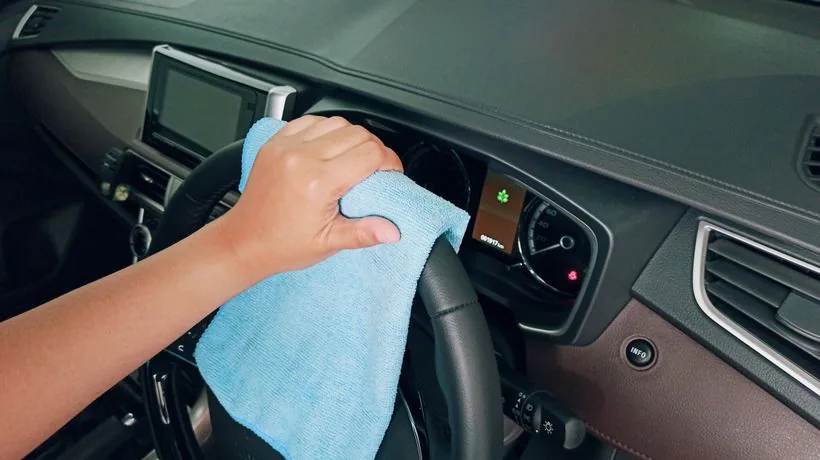
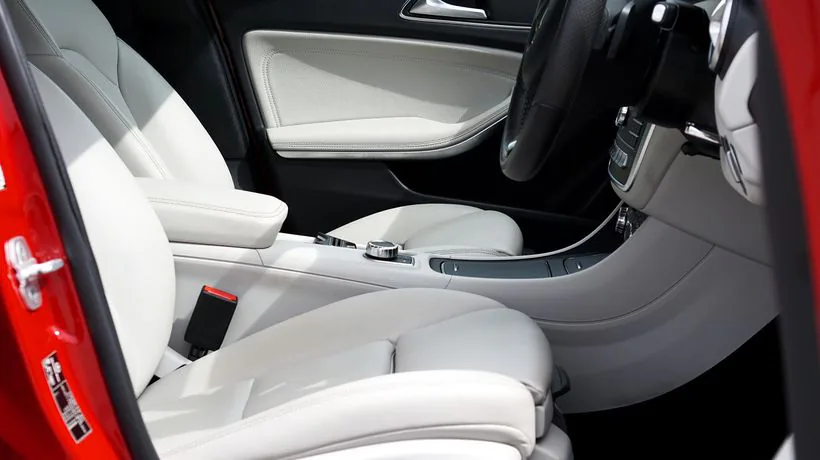
To remove sun cream from car seats, blot away any excess, then clean the area with a leather cleaner on leather or a mild upholstery cleaner on fabric, working it in gently and wiping or blotting away the residue. Rinse with a barely damp cloth and dry. Sun cream is mostly oils, emollients and UV filters, so it behaves like a grease stain: water beads off it, and it slowly darkens as it collects dust. Fresh marks usually lift easily. Older ones on pale leather and light fabric can take several careful passes.
Why does sun cream leave marks on car seats?
Sun cream is designed to stay on skin, so it sticks well to anything else too. Shoulders, backs of legs and arms rest on seat backs, door tops and armrests, leaving a shiny film. Over a summer of beach trips and days out, that film builds up and catches dust, giving the grey or yellowish patches often seen on pale seats.
It is also applied generously. The NHS advises using a sunscreen of at least SPF 30 with at least 4-star UVA protection, reapplying every 2 hours and straight after swimming or towel drying. That is good advice for skin, and it means plenty of fresh cream ends up on the car.
How do you remove sun cream from leather seats?
Mazda's owner's manual lists grease or oil such as hand cream, and alcohol found in cosmetic products, among the substances that should be cleaned off leather upholstery immediately, warning that leaving them can cause premature wear or stains. Sun cream falls into the same group.
- Wipe away any visible cream with a dry microfibre cloth.
- Spray a pH balanced leather cleaner onto a soft brush or cloth, not the seat.
- Work gently over the whole panel, not just the mark, so you don't leave a clean patch.
- Wipe off with a damp microfibre and dry with another.
- Repeat if the cloth still shows grey or yellow residue.
Don't use alcohol wipes, household degreasers or magic erasers on leather. For routine care and products to avoid, see our guide to cleaning leather car seats.
How do you get sun cream out of fabric seats?
On cloth seats, sun cream soaks into the weave and spreads. The University of Georgia Extension's cosmetics guidance for upholstery offers a gentle option: blot with a solution of about 1 teaspoon of neutral detergent in 1 cup of lukewarm water, sponge with clean water and blot dry.
- Scrape off any thick deposit with a blunt edge.
- Apply the detergent solution or a car upholstery cleaner and agitate lightly with a soft brush.
- Blot with a white cloth until no more residue transfers.
- Rinse with a little clean water and blot again, without soaking the foam.
A little cornflour on a fresh, heavy mark absorbs oil before you clean. Leave it for 15 minutes and vacuum it away.
What should you avoid on sun cream marks?
- Chlorine bleach, including bleach based wipes. It strips dye from seat fabric and leaves a pale patch that can't be reversed.
- Strong solvents such as nail polish remover, which damage leather and plastic finishes.
- Hot water and heat, which can push oil deeper into fibres.
- Heavy scrubbing on leather, which wears the coating where seats already take the most rubbing.
Door cards and armrests are often soft-touch plastic or vinyl. Clean these with a mild interior cleaner on a microfibre cloth, then wipe dry so no film remains.
How can you stop sun cream getting on the seats?
- Let sun cream absorb for a few minutes before getting into the car.
- Keep a large towel in the boot to lay over the seats after the beach or pool.
- Use washable seat covers in summer if you have pale leather and young children.
- Wipe the seats with a leather or upholstery cleaner once a week during summer holidays, before marks build up.
Beach trips also bring sand into the cabin, and sand mixed with sun cream makes a gritty paste. Our guide to getting sand out of your car deals with that side of it. For protecting the rest of the interior from heat and sunlight, see our summer car care and UV protection tips.
When is a professional clean the better option?
If sun cream has built up across several seats over a season, or pale leather has turned grey or yellow, a thorough professional clean is the most reliable reset. A valeter cleans each panel with leather or fabric specific products and finishes with a protective layer on leather, which makes the next summer's marks easier to wipe off.
Leather and fabric cleaning is part of our full interior and exterior valet, from £80, carried out at your home or workplace. We can't promise every old mark will vanish, particularly where discolouration has reached the leather beneath the coating, but regular cleaning keeps it from getting that far.
Sources
- NHS: Sunscreen and sun safety
- Mazda: MX-5 Owner's Manual, Leather Upholstery Maintenance
- University of Georgia Extension: Remove Stains From Cosmetics/Makeup/Sunscreen
Summer grease on your seats?
EMobile Valeting brings professional, fully insured mobile valeting to your door across Derby, Nottingham and the East Midlands. No call-out fee.
See Steam Cleaning Get a Free Quote