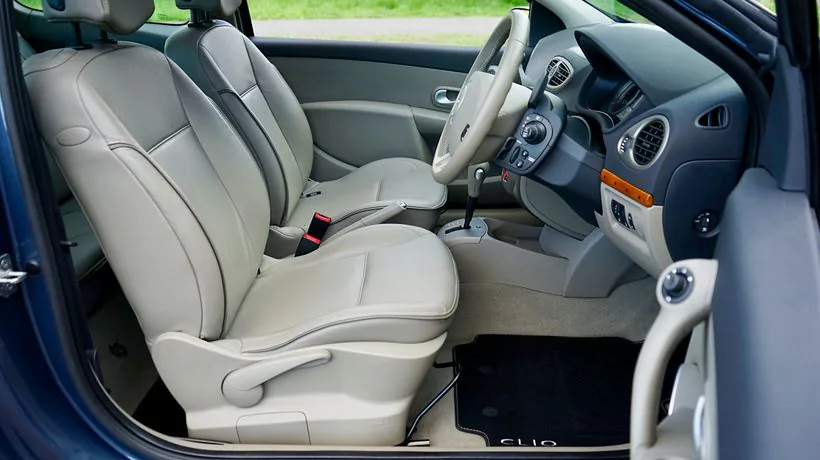
To remove a water stain from car upholstery, lightly dampen the whole affected panel with clean water or a diluted upholstery cleaner, work from the outer edge inwards, extract or blot the moisture out, and dry it quickly. The goal is to stop moisture drying at a hard edge. A water mark, often called a tide mark, forms when wet fabric dries from the outside in, carrying dirt from the foam and minerals from the water to the boundary of the wet patch. Spread the moisture evenly and dry it fast, and there is no edge left to stain.
Why does plain water leave a mark on car seats?
Seat fabric and the foam beneath it hold months of fine dust, skin oils and old spills. When a patch gets wet, that dirt dissolves or loosens. As the patch dries, water evaporates fastest at the edges and draws more liquid outwards, and the dirt travels with it. It is left behind as a brownish ring with a cleaner centre.
Minerals add to it. Hard water is caused by the amount of minerals present, and Thames Water notes that it can leave behind a chalky residue called limescale. In a hard water area, tap water used to clean a seat can leave a faint pale outline on dark fabric; your water company's postcode checker will tell you how hard your supply is. The University of Georgia Extension also warns that overwetting upholstery can cause the fabric's finish to migrate and leave a circle in the treated area.
How do you remove a water ring from fabric seats step by step?
- Vacuum the panel so loose dust doesn't turn to mud.
- Mist the entire panel, seam to seam, with distilled water or a weak upholstery cleaner solution. Treating only the ring just moves it.
- Work from the outside in. Gently brush from the edge of the panel towards the centre with a soft brush.
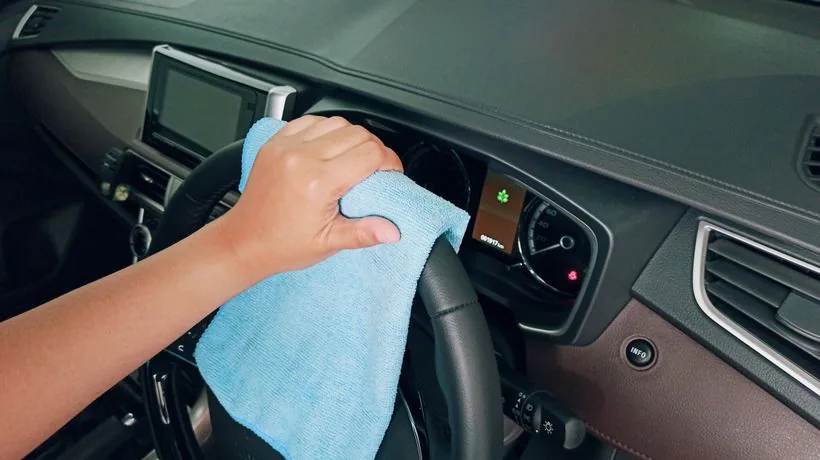
- Extract. A wet and dry vacuum is ideal. Otherwise press folded microfibre towels firmly into the fabric and keep turning them.
- Feather the edges. Lightly mist the boundary where you stopped and blot again, so there is no sharp line between treated and untreated fabric.
- Dry fast. Open the doors or run the heater with the air conditioning on. Slow drying recreates the ring.
Older marks may need two or three rounds, with the seat drying fully in between. For a full deep clean of every seat, see our guide to cleaning car upholstery at home.
What about water marks on leather and headlinings?
Leather: coated leather rarely holds a true tide mark, but water can leave a dull patch or dried mineral spots. Wipe the whole panel with a leather cleaner, then a damp cloth, and dry it straight away. Mazda's owner's manual advises removing moisture from leather upholstery promptly with a dry cloth, because moisture left on the surface can cause hardening and shrinkage.
Headlinings: the roof lining is glued to a backing board, and soaking it can loosen the adhesive and cause sagging. Use only a barely damp microfibre and an upholstery cleaner sprayed onto the cloth. A water mark on the headlining is also a common sign of a leak from a sunroof drain or windscreen seal.
Could a leak be causing the stains?
If damp patches keep coming back in the same place, cleaning will only ever be temporary. Common causes include:
- Blocked sunroof drains that overflow into the headlining and A pillars.
- Perished door or boot seals, which let rain run onto seat edges or the rear carpet.
- A blocked air conditioning drain, often leaving the front passenger footwell wet.
- Leaving a wet coat or umbrella on a seat, which is the simplest cause of all.
Persistent moisture also invites mould and a musty smell. Our guide to finding the source of a damp smell walks through how to trace a leak. In autumn and winter, when the cabin rarely dries out naturally, it is worth checking seals and drains before the wet weather settles in.
What makes water stains worse?
- Spot cleaning a small patch in the middle of a seat, which creates a new, larger ring.
- Soaking the fabric, so water reaches the foam and pulls up more dirt.
- Strong household detergents, which leave sticky residue that darkens as it collects grime.
- Closing the car up damp, especially overnight in cold weather when nothing evaporates.
When should you ask a valeter to deal with water marks?
Large rings across several seats, marks on a sagging headlining, and stains linked to a smell are better treated with professional extraction. A hot water extractor rinses the whole panel evenly and pulls most of the moisture straight back out, which is exactly what tide marks need. On a visit we treat each affected panel edge to edge and leave the car ventilated to dry.
Water marks are dealt with as part of our full valet from £80. If a leak has already led to visible mould, our mould removal service from £80 removes visible growth and treats the affected areas, although the leak itself needs fixing by a garage or bodyshop to stop it returning.
Sources
- Thames Water: Hard water
- University of Georgia Extension: Remove Stains From Ketchup, Tomato, Tomato-based Sauces/Juices
- Mazda: MX-5 Owner's Manual, Leather Upholstery Maintenance
Water marks spoiling your seats?
EMobile Valeting brings professional, fully insured mobile valeting to your door across Derby, Nottingham and the East Midlands. No call-out fee.
See Steam Cleaning Get a Free Quote