For most car interiors, steam cleaning is the better routine choice because it lifts dirt and odour with very little moisture, so seats dry in an hour or two and there is little risk of watermarks or damp foam. Shampooing with a proper wet extractor is stronger on heavily soiled, neglected fabric and big spills, but it puts much more liquid into the seat and needs careful extraction and drying. The honest answer is that they suit different jobs, and a professional often uses both on the same car.
How do the two methods differ?
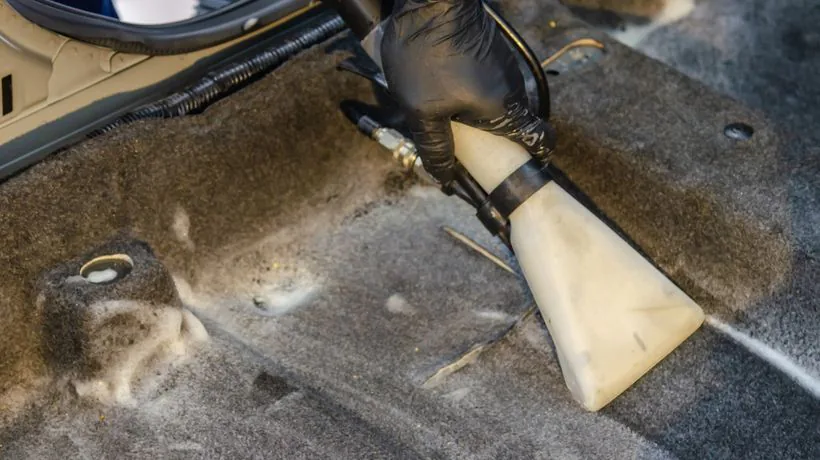
Shampooing means spraying or brushing a detergent solution into the fabric, agitating it so the dirt is suspended, then pulling the dirty liquid back out with a wet vacuum or hot water extractor. The quality depends almost entirely on the extraction. Without it, the dirt and detergent simply dry back into the seat.
Steam cleaning pushes hot, low-moisture vapour into the fibres. Heat softens grime, body oils and sugary spills, and the small amount of condensed moisture carries it to the surface, where it is wiped or extracted. It relies on temperature rather than chemistry.
Which cleans better?
It depends on what is wrong with the seats.
- Heavily soiled or neglected seats: shampoo and extraction usually wins, because the detergent breaks down large amounts of ground-in dirt in one pass.
- Sticky spills, sweets and grease: steam is excellent, since heat softens sugar and oil quickly.
- Odours from food, pets or smoke: steam tends to perform better, as heat releases residue trapped in the fibres and leaves no perfumed detergent behind.
- Vents, seat rails, plastics and stitching: steam only. Shampoo is a fabric method.
- Old dye stains such as ink or red wine: neither reliably removes them; they need a specific stain treatment first.
What are the risks of each?
Shampoo's main risk is too much water. Seat foam acts like a sponge, and if it is soaked and not fully extracted it can take a day or more to dry in a British winter. That leads to tide marks, where dirt wicks to the edge of the damp patch, and to a musty smell. Government guidance on damp and mould notes that excessive moisture promotes the growth of mould and other fungi, and a sealed car with wet seats is ideal for it. Detergent left in the fabric also attracts dirt, so seats can look grubby again sooner.
Steam's risks are heat and technique. Held too long in one spot it can stress adhesives, delicate trim or untreated leather, and it needs care around screens, airbag panels and the headliner. Used correctly, damage is rare.
Which dries faster?
Steam, by a wide margin. A steamed seat usually feels dry to the touch within an hour or two. A shampooed seat with good extraction can be dry in a few hours on a warm day, but in cold, damp weather it may take overnight, and the car should not be shut up wet. If you shampoo at home, choose a dry, breezy day, leave the doors open and run the heater on fresh air afterwards. If a seat has already dried with a ring, our guide to removing water stains from car upholstery explains how to blend it out.
Is steam better for allergies?
Steam has a real advantage here. Allergy UK notes that a high-temperature steam cleaner can kill house dust mites in carpets, which shampooing at lukewarm temperatures does not do. Heat also reduces bacteria on the surfaces it reaches. It will not remove every mite or allergen, and anyone with symptoms should see a GP, but for a family car or a driver with hay fever, steam is the more useful routine method.
What do professionals usually do?
A good valeter chooses by condition rather than habit. On a car that is cleaned regularly, steam with extraction is usually all that is needed. On a neglected interior, the seats may be steamed to loosen the grime, treated with a mild solution on the worst areas, then extracted thoroughly so nothing is left in the foam. That is how we approach a steam clean of seats and carpets, from £60. Seat fabric is also cleaned as part of a full interior and exterior valet, from £80. For a light DIY refresh between visits, see how to clean car upholstery at home.
Sources
- GOV.UK: Understanding and addressing the health risks of damp and mould in the home
- Allergy UK: House dust mite allergy
Want a deep clean that dries fast?
EMobile Valeting brings professional, fully insured mobile valeting to your door across Derby, Nottingham and the East Midlands. No call-out fee.
See Steam Cleaning Get a Free Quote