
To prep your car for a road trip, do the mechanical checks about a week ahead, clean the car thoroughly a day or two before, then pack it so the load is secure and the cabin stays usable. That order matters: it leaves time to fix a worn tyre or blown bulb, and means you load clean luggage into a clean car rather than piling it on last month's crumbs. Below is a practical timeline, from safety checks through cleaning and packing to the small kit that keeps a car pleasant over several hours.
What should you check a week before you go?
The Highway Code's vehicle maintenance annex sets out the basics, and they matter more on a long, loaded run:
- Tyres: at least 1.6 mm of tread across the central three quarters, no cuts or bulges, and pressures checked when cold. Many handbooks give a higher pressure for a fully loaded car; use it.
- Fluids: the Code suggests checking fluid levels at least weekly. Look at oil, coolant, brake fluid and screenwash.
- Lights: every bulb, including brake lights and the number plate lamp.
- Wipers: replace blades that smear or judder.
- Spare and tools: check the spare's pressure or that the inflation kit is in date, and that the locking wheel nut key is in the car.
If anything needs a garage, a week is usually enough to get it sorted.
How do you clean the car before a long trip?
Hours of motorway driving into low sun or headlights show up every smear on the glass, so visibility comes first.
- Windows and windscreen: the AA notes that gases from interior plastics can make the inside of the windscreen greasy, and recommends a clean microfibre cloth in long, smooth strokes while avoiding ammonia based cleaners. Our guide on cleaning car windows without streaks has the full method.
- Mirrors and cameras: wipe door mirrors, the rear view mirror and parking camera lenses.
- Lights and number plates: the Highway Code says these must be kept clean and clear.
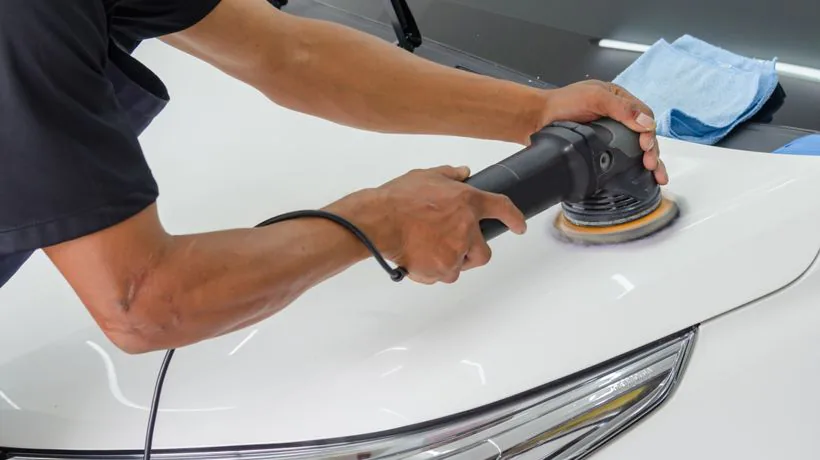
- Exterior: a wash with a coat of wax or spray sealant helps bug splatter and road film rinse off at the other end.
How do you get the interior ready?
Start with an empty car. Take everything out of the boot, door pockets, seat backs and glovebox, then vacuum seats, carpets and the boot floor. Wipe the dashboard, steering wheel, gear lever and touchscreen. A clean cabin is more comfortable for hours at a time, and it is far easier to keep tidy on the journey if you begin with nothing in it.
If the car needs more than a quick tidy, our mobile car valeting can do a full interior and exterior valet from £80 on your drive the day before you leave.
How should you pack the car?
Rule 98 of the Highway Code says you must secure your load and it must not stick out dangerously, and that heavy or sharp objects and any animals should be secured safely. In practice:
- Put the heaviest bags low and forward in the boot, against the back of the rear seats.
- Keep the rear window clear where possible; if it is blocked, rely on both door mirrors.
- Use a boot liner or old blanket to protect the carpet from wet or sandy kit.
- Do not let loose items roll around the footwells, where they can slide under the pedals.
- Remember a heavily loaded car or one pulling a trailer may need its headlights adjusted, as the same rule notes.
What should you keep within reach on the journey?
- A small bag of rubbish sacks, so wrappers and cups go straight in.
- Wet wipes and a microfibre cloth for sticky hands and a misty screen.
- Phone chargers and a mount, set up before you leave.
- Water and snacks that do not crumble or melt.
- Sunshades for rear passengers.
- A torch, a warm layer and a charged phone in case of a breakdown.
Plan stops as well as kit. Rule 91 of the Highway Code recommends a break of at least 15 minutes after every two hours of driving, and advises against long journeys between midnight and 6am, when natural alertness is at a minimum.
What should you do when you get back?
Unload everything, vacuum out sand, grass and crumbs before they work into the carpet, and remove bug splatter from the front of the car within a day or two, before it etches the paint. After a beach holiday, our guide on getting sand out of your car helps. If you would rather hand it over, we cover car valeting in Derby and nearby towns, Monday to Saturday.
Sources
- GOV.UK: The Highway Code, annex 6 vehicle maintenance, safety and security
- GOV.UK: The Highway Code, rules for drivers and motorcyclists (89 to 102)
- The AA: How to clean your windscreen
Heading off on a road trip?
EMobile Valeting brings professional, fully insured mobile valeting to your door across Derby, Nottingham and the East Midlands. No call-out fee.
See Car Valeting Get a Free Quote